

Pasta alla Gricia Recipe: Easy Roman Pasta with Guanciale
This article contains affiliate links. We may receive compensation if you make a purchase using one of these links at no additional cost to you. See our Disclaimers and Terms of Use for more information.


Pasta alla gricia may be the best of Rome’s “fantastic four.” It’s certainly the most accessible.
It’s the one that fits the bill if you’re looking for an everyday pasta that’s both complete as a meal and easy to make. It’s also a dish that epitomizes the Roman style of pasta cookery.

Pasta alla gricia was new to us when we ate a tasty bowl at the Mercato di Testaccio in Rome. At the time, it was just a pasta that we had read about but didn’t quite recognize. Now it’s a top contender for our favorite Roman pasta.
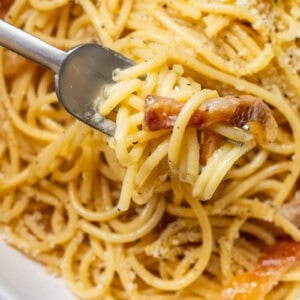
Pasta alla gricia is all about pure, fatty pork flavors and the way those flavors meld with pasta. In this dish, the pork fat in guanciale melds with starchy pasta water to create a basic white sauce that’s the star of the pasta show. Sure, Pecorino Romano and black pepper share the playbill but, unlike in cacio e pepe, these ingredients merely act as necessary supporting actors.
🍽️ This Recipe at a Glance
- What it is: A Roman pasta with guanciale, Pecorino Romano and black pepper. No eggs, tomatoes or cream.
- Flavor: Porky, salty and peppery
- Serves: 2
- Time: 25 minutes plus 30 minutes to freeze the guanciale
- Key ingredients: Guanciale, spaghetti, Pecorino Romano, black pepper
- Key technique: Boil the spaghetti in just 5 cups of water. The extra-starchy water makes the sauce creamy.
- Substitutions: Pancetta or bacon for the guanciale. Rigatoni for the spaghetti.
- Wine pairing: Cesanese or another light red from Lazio
What Is Pasta alla Gricia?

Pasta alla gricia is a Roman pasta made with guanciale, Pecorino Romano and black pepper. Think of it as carbonara without the eggs or amatriciana without the tomatoes. Some Romans call it amatriciana bianca for that reason.
If we could travel back in a time machine a few hundred years, we’d like to think that alla gricia would be the pasta that most Romans would be eating upon our arrival. In the real world, we have to settle for the pasta’s documented history which is sketchy at best.
Some stories link the dish to the mountain origins of pasta amatriciana and a small town called Grisciano while others reference a Swiss canton. The recipe has even been linked to German bakers in Rome. In other words, nobody knows for sure.
Discover our favorite Rome restaurants for pasta alla gricia and other classic dishes.

What we do know is that stretching ingredients in dishes like alla gricia has sustained people throughout human history. In all likelihood, ancient Roman cooks didn’t understand starch and fat emulsions scientifically. Even so, they probably appreciated the dish’s simple, affordable way of taking a little bit of cured pork and creating something satisfying and magical.
Luckily, we don’t need to know its definitive origins to create this delicious pasta dish. Our job is to honor the spirit of the cuisine while replicating the nature of the flavors and textures that make the dish a classic.
Ingredients

The pasta alla gricia ingredient list is ridiculously short with just a handful of items:
Ingredient quantities are detailed in the printable recipe card below.
The dish starts with guanciale (fatty pork jowl). While you can substitute pancetta or even bacon for this product, the flavor and fat content won’t quite be the same. If you live in the USA, we encourage you to find guanciale either at a specialty retailer or via mail order. You can alternatively order guanciale from Italy but the shipping costs will likely be substantially higher.
We recommend splurging on quality pasta. Look for pasta produced through bronze dies since that process leaves a rough, grippy edge on the pasta that allows the sauce to stick better. We like to use spaghetti; therefore, our dish is spaghetti alla gricia. Rigatoni and mezze maniche (i.e., short, ridged tubes) are just as traditional in Rome.

Using Pecorino Romano cheese is a must. We encourage you to grate the cheese on the smallest setting on a box grater. You’ll want to place it aside and have it at the ready for when you complete your sauce.
Lately we’ve been using a large peppermill, and it really makes a difference. Every crank of the mill yields a substantial grind of pepper. We never thought of splurging on a large peppermill, but, after using one at home, we’ve found that it’s worth the extra money.
How to Make Pasta alla Gricia

Our gricia recipe begins like many others but, instead of removing our guanciale from the pan, we choose to lower the heat after the fat begins to render, allowing the pork to slowly caramelize. To us, the resulting pork fat is a beautiful thing. Pork fat is one of the true wonders of cuisine. It melts like a dream and flavors dishes like no other ingredient.
You don’t want the guanciale to burn like crisp bacon. Once the pork has browned sufficiently, remove it from the low heat of the stove. You’ll want the pan to be well heated once the pasta water and pasta are added to the pan. The pasta water will loosen a fair amount of flavorful fond formed from the browning pork fat.

Our recipe calls for a large amount of pasta water, about 1 1/2 cups. This may seem like a lot, but if you boil your pasta in a minimal amount of water (about 5 cups for a half pound of pasta), the water should thicken to a viscous slurry.
We also call for a small amount of grated Pecorino Romano, about 1/4 cup. You can grate additional cheese on top of the pasta for service. Finally, we recommend grinding the pepper on the pasta as a last step so that it’s at its freshest and most aromatic.
Step-by-Step Instructions
Begin by freezing the guanciale (or pancetta or bacon) for 30 to 45 minutes. This step prevents the fat from melting in your hands and enables you to slice the meat thinly and evenly.
Cut the rind off the guanciale. (Do the same if there’s a hard rind on the pancetta.) We like to slice our guanciale about a quarter-inch thick.
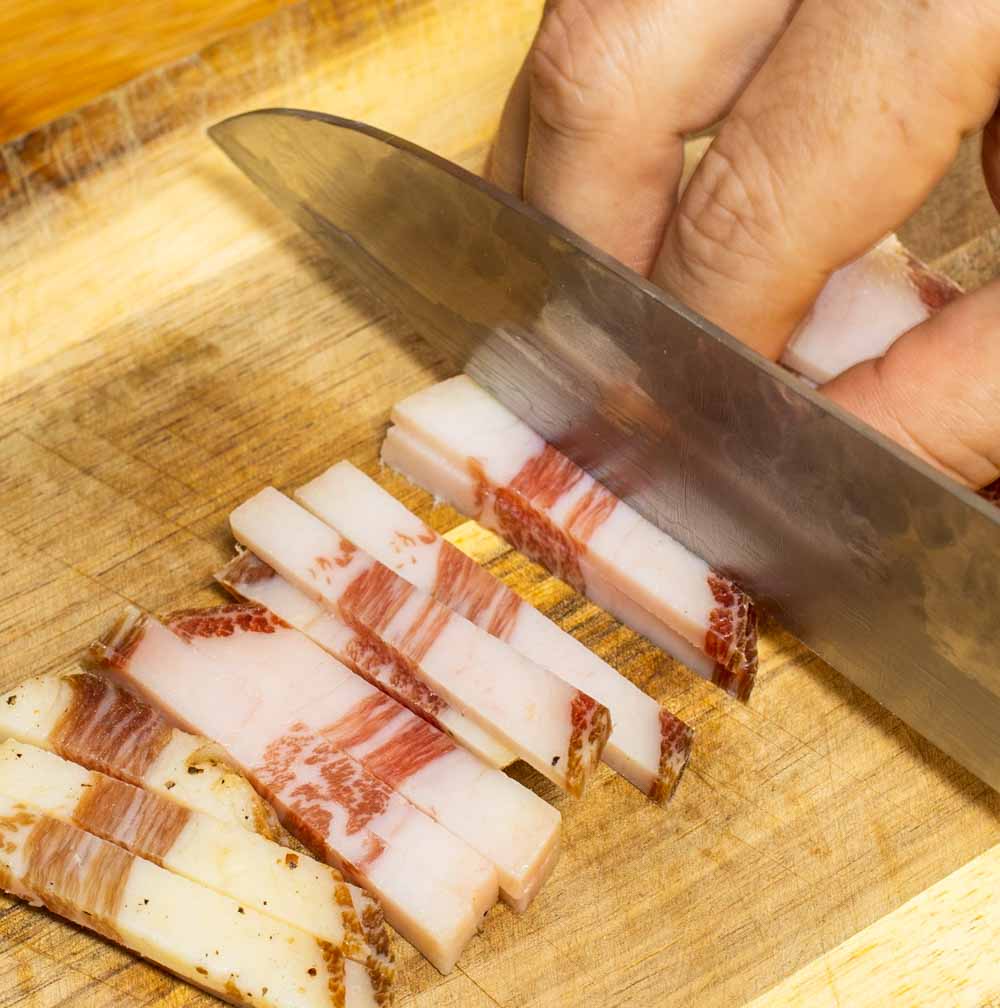
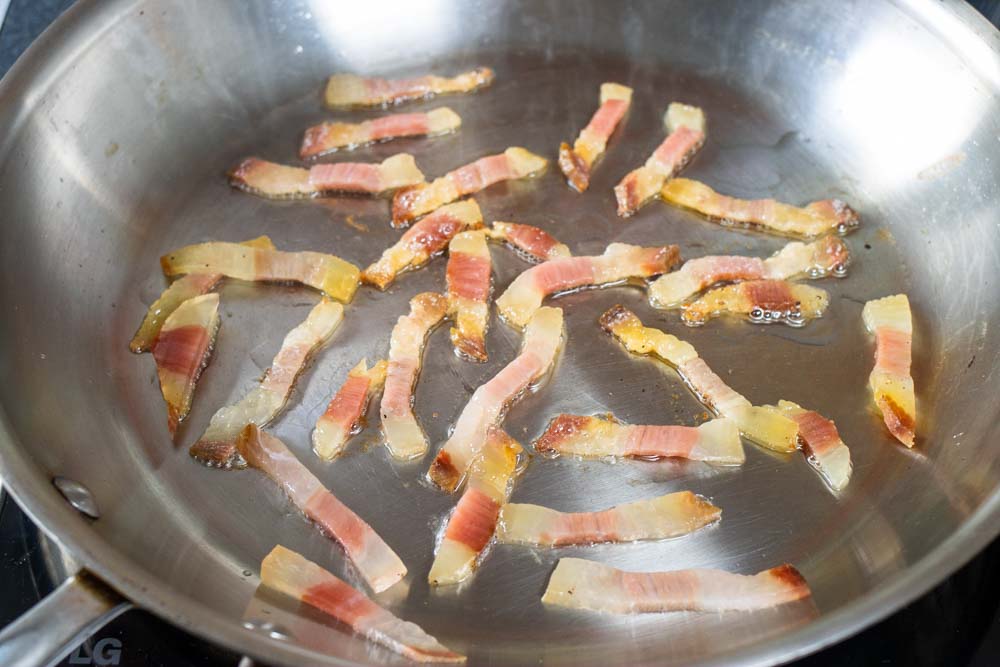
Lay the guanciale flat in a cool 12″ frying pan. Turn the heat to medium-high. Cook the guanciale until it just browns on the edges and the fat begins to render. Turn the heat to the lowest setting.
Keep an eye on the pan and remove the pan from the heat if you feel that the meat is close to burning.
To begin the pasta, boil about 5 cups of salted water in a saucepan large enough to fit the pasta.
Important Note
While many recipes call for boiling the pasta in a large amount of water, we use less water for two reasons. First, a smaller amount of water takes less time to recover to a full boil once the pasta is added. Second, the density of starch is greater with less water, which creates a sort of loose slurry that thickens the sauce.
When using a long-strand pasta like linguine or spaghetti, it may be easiest to use a 12″ sauté pan to boil the pasta. If, like us, you use a large saucepan, you’ll still need to bend the long-strand pasta to submerge it all in a small-diameter pan in a small amount of boiling water.
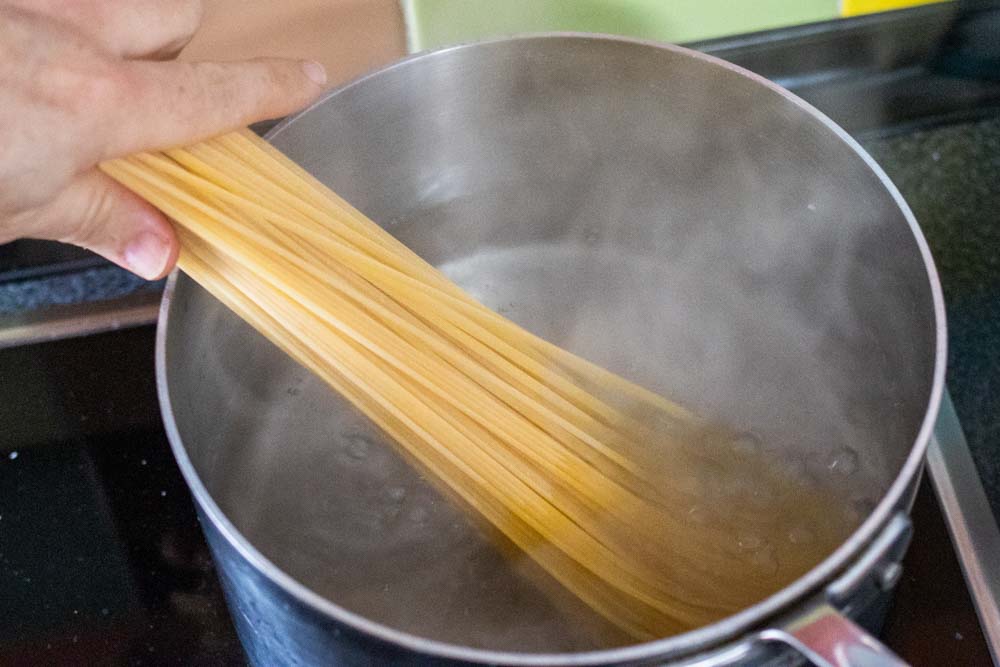
Either way, we prefer pans with long handles (like our All-Clad pictured here) since they make it easier to use tongs to remove the pasta from the pasta cooking water.
About 3 minutes before removing the pasta from the pan, turn the heat on the pan with the guanciale to medium-high. About 30 seconds before your pasta is ready, pour about 3 to 4 ladlefuls of pasta water into your pan. The starchy pasta water will not only help create the pasta sauce but it will also deglaze the pan, liberating any flavorful fond formed on the bottom of the pan by the pork.

Once the spaghetti is cooked to just al dente (you can taste to check), use tongs to transfer the pasta to the pan for finishing.

If you choose to use a colander instead, you can move about 1 cup of the cooked pasta water to a heatproof measuring cup before draining your pasta. Though you may not need the water, it’s good to have some in reserve in case the sauce gets too thick.
Once the pasta is in the guanciale pan, mix the pasta, the pasta water and the guanciale. Add more pasta water as needed to make a viscous sauce. (We typically use about 1 1/2 cups of the pasta water.)

Remove the pan from the heat. Add the Pecorino Romano and stir with the pasta.

The sauce should be white and creamy. Grind in fresh black pepper to taste. You can optionally grate more Pecorino Romano when serving.
Wine Pairing
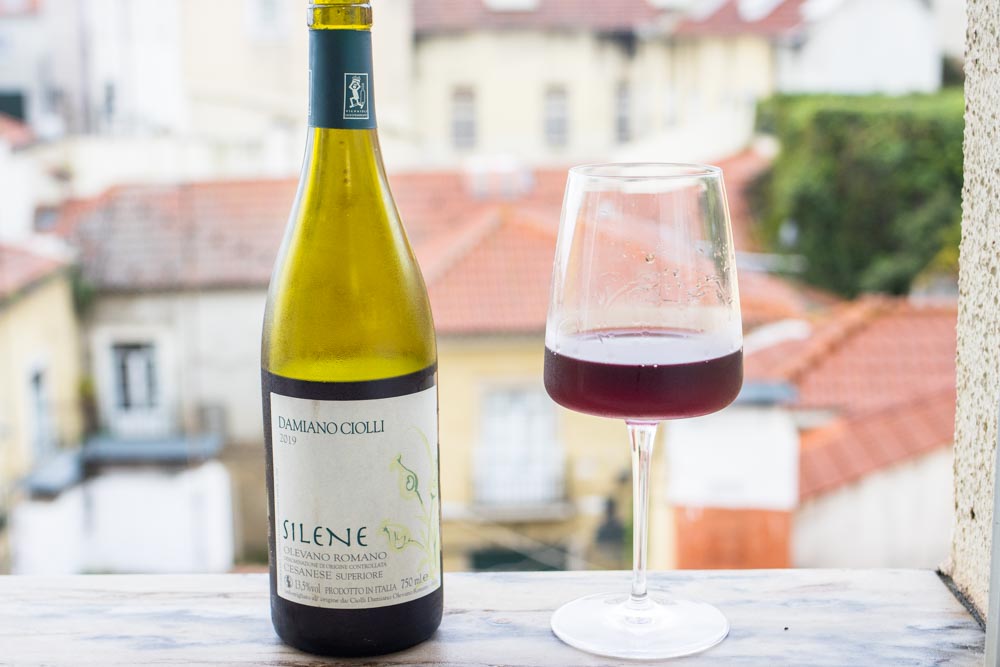
Wine Pairing: Silene: 2019 | Damiano Ciolli | Lazio | Cesanese
We like to pair Roman pastas with Roman wine. We paired this dish with Damiano Ciolli’s Silene, a light-bodied red that we liken to an earthy pinot noir. Prominent flavors include mushroom, cherry and raspberry.
These flavors weren’t a surprise. Since we got this bottle as part of our Roscioli Italian Wine Club delivery, we already knew that it was a winner.

Pasta alla Gricia Recipe
Ingredients
- 5 ounces guanciale (pancetta or bacon can substitute)
- ½ pound spaghetti
- ¼ cup Pecorino Romano cheese (grated on a box grater's smallest setting)
- 1 tablespoon salt (for the pasta water)
- ground black pepper (1 to 2 teaspoons, to taste)
- Pecorino Romano cheese (grated, additional for serving)
Equipment
Instructions
- Place guanciale in the freezer for 30 to 45 minutes. Freezing the guanciale will make it easier to slice.
- Cut the rind off the guanciale. Slice guanciale into lardons about 1/4" thick by 1/2" wide.
- Place cut guanciale flat into a cool pan and turn the heat to medium-high.
- Turn the heat down to its lowest setting once the guanciale just begins to turn translucent, gets brown on the edges and renders its fat. Keep an eye on the pan. If the guanciale looks like it's beginning to get too brown, remove it from the heat.
- Boil the spaghetti in 5 cups of water with the salt. You may need to gently bend the pasta so it’s all submerged. Cook per instructions on the pasta box.
- Raise the heat on the guanciale to medium-high about 3 minutes before the pasta is ready.
- Just before removing the pasta, transfer 3 to 4 ladlefuls of the pasta water (about 1 1/2 cups) into the pan with the guanciale. Scrape up any brown bits that have accumulated in the pan.
- Use tongs to transfer the pasta to the guanciale pan. If you choose to use a colander to drain the pasta first, reserve about 1 cup of the pasta water before draining the pasta.
- Mix the pasta with the starchy pasta water and guanciale. Add more pasta water if the sauce gets too thick. The pasta is ready when you can see the bottom of the pan when you drag a wooden spoon across it. Remove from heat.
- Add the Pecorino Romano and mix until the sauce is creamy.
- Once the pasta and sauce are done, mix in a generous amount of ground black pepper to taste.
- Grate additional Pecorino Romano on top of the pasta. Devour!
Notes
- You can replace guanciale with pancetta or bacon based on availability. However, we highly recommend guanciale for this dish.
- If you serve this recipe as a starter, it should serve 4 people.
- You can double this recipe to serve 4 as a main dish.
Nutrition
💡 Frequently Asked Questions
Pasta alla gricia is a Roman pasta made with guanciale, Pecorino Romano and black pepper. It’s one of Rome’s four classic pastas along with amatriciana, cacio e pepe and carbonara.
Guanciale, pasta, Pecorino Romano, ground black pepper and water. You’ll also need salt for the pasta water.
Both pastas start with guanciale, Pecorino Romano and black pepper. Carbonara adds eggs. Gricia gets its creamy texture from pork fat and starchy pasta water instead.
Tomatoes. Amatriciana is gricia with tomatoes added, which is why gricia is sometimes called amatriciana bianca (i.e., white amatriciana).
Nobody knows for sure. It’s a Lazio dish that many people trace to Grisciano, a village near Amatrice. Another story credits the grici, food sellers in Rome with roots in a Swiss canton.
Yes. Pancetta is the closest substitute. Bacon works too but adds a smoky flavor that isn’t traditional.
We use spaghetti. Rigatoni and mezze maniche are just as common in Rome, and tonnarelli and bucatini work too.
The pan was too hot when you added the cheese. Take the pan off the heat before adding the Pecorino Romano and loosen the sauce with a splash of pasta water.
It’s best eaten right away. Refrigerate leftovers in a sealed container for up to two days and reheat them in a pan over low heat with a splash of water.
🍴More Pasta Recipes


📍 Pin This Article


⚙️ Disclosures
Article Updates
We update our articles regularly. Some updates are major, while others are minor link changes and spelling corrections. Let us know if you see anything that needs to be updated in this article.
Funding
We purchased the ingredients and tools used to create this recipe.
