

40 Best Candies in the World (We’ve Eaten Them All)
This article contains affiliate links. We may receive compensation if you make a purchase using one of these links at no additional cost to you. See our Disclaimers and Terms of Use for more information.


While food cultures and cuisines vary around the world, candy is universal. Sure, some of it may seem weird to Americans at first glance, but it’s impossible to think of a country without at least one candy loved by kids of all ages.

Some countries take their love for candy to the next level. Belgium and Switzerland are famous for milk chocolate while Germany and Japan push the envelope with creative candy. Then there are the US and UK, home to many of the world’s most popular candy brands.
Ultimately, it’s a big world with a lot of candy. Our goal is to eat as much of it as possible.
🔑 Key Takeaways
- This list covers 40 candies from 21 countries. It runs from A to Z since ranking them felt impossible.
- Germany, the UK and the US lead the list with five candies each. Switzerland follows with four.
- Turkish delight (1777) is the oldest candy on the list. Dubai chocolate (2021) is the newest.
- Mondelēz owns seven of the 40, including Cadbury Dairy Milk, Milka and Toblerone.
- Some candies rarely leave home. Coffee Crisp (Canada), Kvikk Lunsj (Norway) and Pintarolas (Portugal) are worth seeking out when you travel.
Our Picks for the Best Candy in the World
We love discovering candy wherever we travel. Thanks to globalization, we can do it at home in Portugal and the US too. After eating a LOT of candy during our travels and at home, these are our picks for the best candies in the world:
1. Cadbury Dairy Milk Bar

Year Introduced: 1905
Country of Origin: United Kingdom
Current Owner: Mondelēz International, Inc.
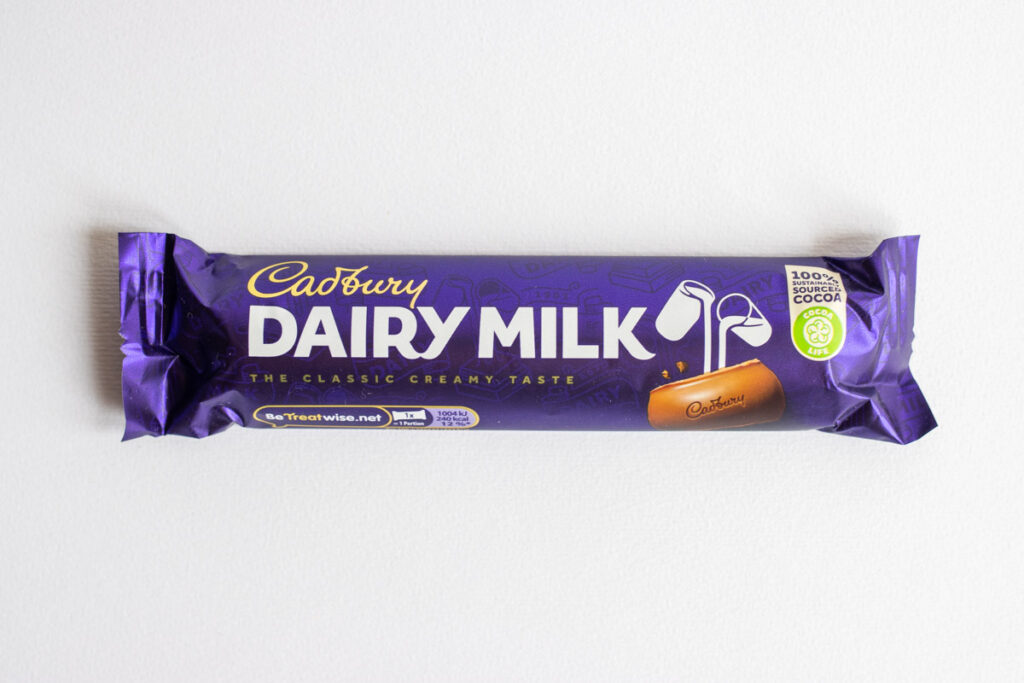
British people love Cadbury chocolates but none more than the Cadbury Dairy Milk bar. Allegedly made with a glass and a half of milk, the iconic milk chocolate bar is the best-selling British candy.
Beyond the UK, it’s popular on every continent with the possible exception of Antarctica. Clearly, we’re not the only ones who love this creamy, dreamy milk chocolate bar. The same goes for Cadbury’s seasonal Creme Egg, which is globally popular every Easter.
2. Chokito


Year Introduced: 1964
Country of Origin: Switzerland
Current Owner: Nestlé
Despite its Swiss roots, Nestlé’s Chokito is beloved in two disparate countries: Brazil and Australia. With its caramel fudge center, crispy rice flakes and milk chocolate coating, the Chokito isn’t so different from the 100 Grand Bar which some older candy lovers still call the $100,000 Bar.
3. Chupa Chups Lollipops


Year Introduced: 1958
Country of Origin: Spain
Current Owner: Perfetti Van Melle
The folks at Chupa Chups make children smile with colorful lollipops that come in different sizes and more than 100 flavors. (Apple, cola, strawberry and strawberry & cream are the most popular flavors.) Parents love Chupa Chups too since these lollipops are both affordable and mess-free. Little known fact: Salvador Dalí designed the stylish logo for these Spanish treats.
4. Coffee Crisp


Year Introduced: 1938
Country of Origin: Canada
Current Owner: Nestlé
Coffee Crisp, Canada’s most popular candy, is a mystery to most people who don’t live in the Great White North. Produced in Toronto and similar to the Kit Kat, this chocolate-coated coffee-flavored wafer candy is rarely sold outside Canada, which explains the mystery. It’s a great candy bar to eat on the go or, better yet, with a cup of coffee.
5. Daim Bar


Year Introduced: 1952
Country of Origin: Sweden
Current Owner: Mondelēz International, Inc.
The Daim Bar is a milk chocolate bar filled with sweet, crunchy almond toffee. You’re not dreaming if this sounds familiar. For starters, you may have seen Daim Bars at Ikea before the Swedish superstore stopped selling them in 2023. However, it’s more likely that you’re already a fan of Heath and Skor candy bars, both made by Hershey’s. All three candy bars are eerily similar.
6. Dubai Chocolate

Year Introduced: 2021
Country of Origin: United Arab Emirates
Current Owner: Fix Dessert Chocolatier
Dubai chocolate became a global TikTok sensation three years after Fix Dessert Chocolatier launched the candy phenomenon in the UAE. The unique milk chocolate bar, filled with kadayif and pistachio-tahini cream, is creamy, crunchy and sweet all at once.
At approximately $20 per bar, the original Fix version, officially titled Can’t Get Knafeh of It, is a luxury item. Copycats like the one pictured here are cheaper and easier to find. Many capture the spirit of the original.
7. Fazer Salmiakki
Year Introduced: 1938
Country of Origin: Finland
Current Owner: Fazer Group
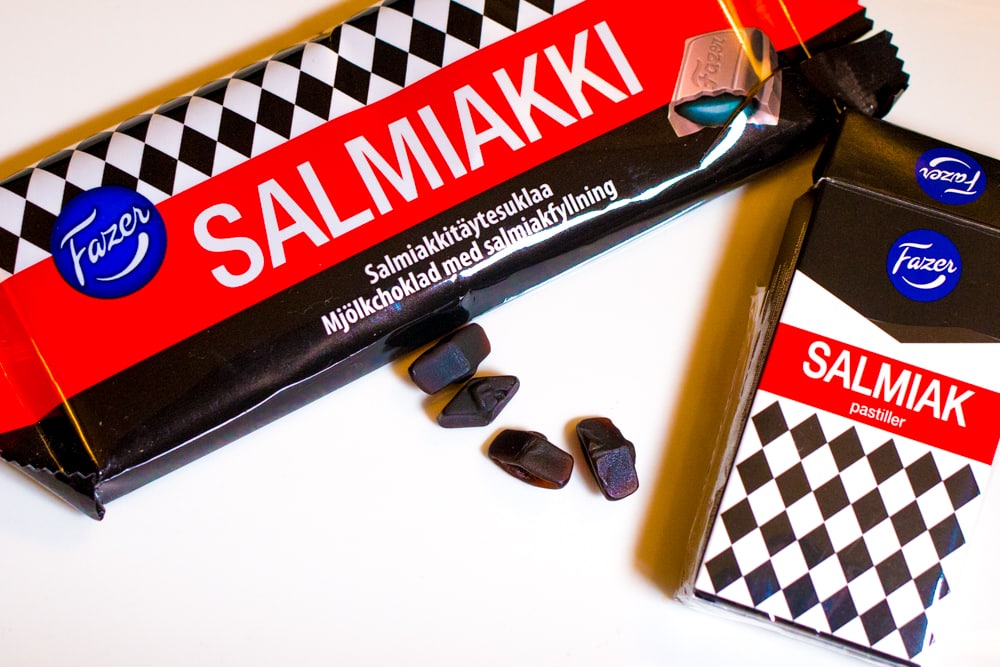
Salty licorice requires a special licorice-loving palate. While black licorice flavored with salmiak salt is wildly popular in Nordic countries like Denmark, Iceland, Norway and Sweden, it’s an acquired taste that many people in other countries never acquire.
Finland’s Fazer makes a Salmiakki candy bar that pairs salty licorice with sweet milk chocolate. It’s a fun combination for candy lovers like us who’ve already acquired the taste.
8. Ferrero Rocher


Year Introduced: 1982
Country of Origin: Italy
Current Owner: Ferrero International SpA
Invented in Alba, an Italian town famous for its white truffles, each Ferrero Rocher packs a big punch inside a small package. In this case, the package includes a whole roasted hazelnut that’s dipped in smooth chocolate cream and surrounded with crispy wafers and hazelnut pieces. A gold wrapper adds a stylish finishing touch.
The confection could be called the son of Nutella. The Ferrero Group started selling the spread’s precursor 36 years earlier in 1946.
9. Galaxy / Dove

Year Introduced: 1960
Country of Origin: United Kingdom
Current Owner: Mars, Inc.
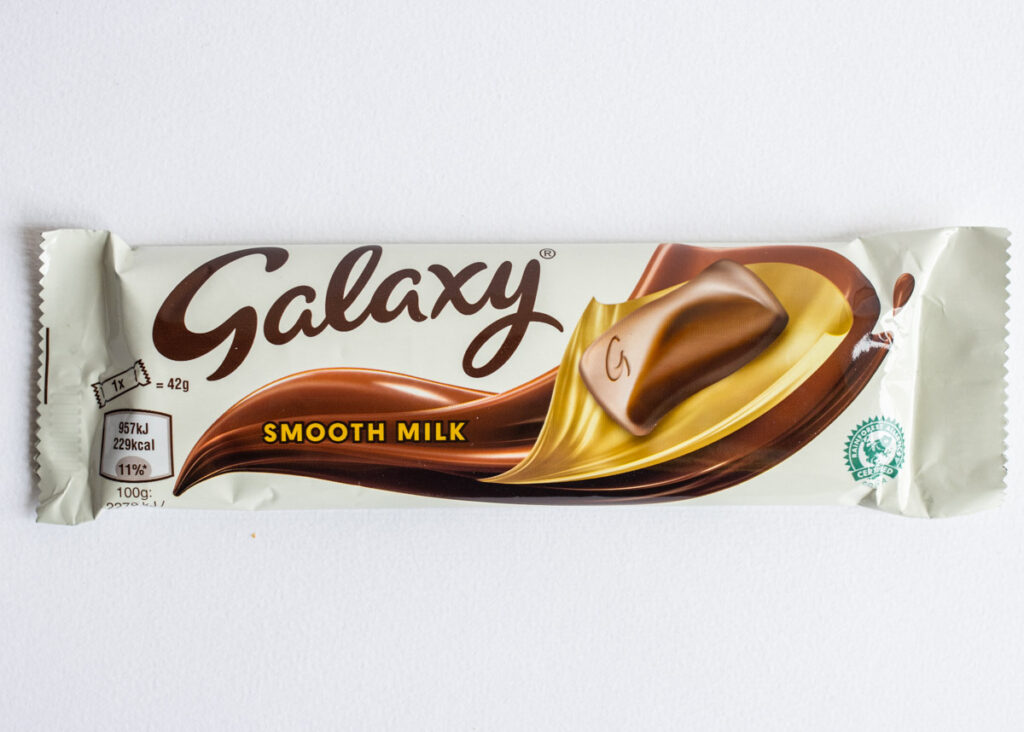
Since the Galaxy Smooth Milk bar is the second most popular candy bar in the UK, the question isn’t if Brits love milk chocolate. Instead, the question is: Why is the same candy bar called a Dove bar in the US?
Under either name, it’s pure milk chocolate with no nuts or add-ins.
10. Haribo Gold Bears


Year Introduced: 1922
Country of Origin: Germany
Current Owner: Haribo GmbH & Co. KG
Haribo, a German candy empire, started selling gummy bears called Goldbären more than a century ago. While there are now scores of Haribo gummy variations, the OG gummy bears are still the company’s best-selling candy.
Despite the German name that literally translates to gold bears, these gummies are sold in a rainbow of colors around the world. The flavors vary by country. The US flavors are lemon, orange, pineapple, raspberry and strawberry while the German version adds apple to the fruity mix.
11. Hershey’s Bar
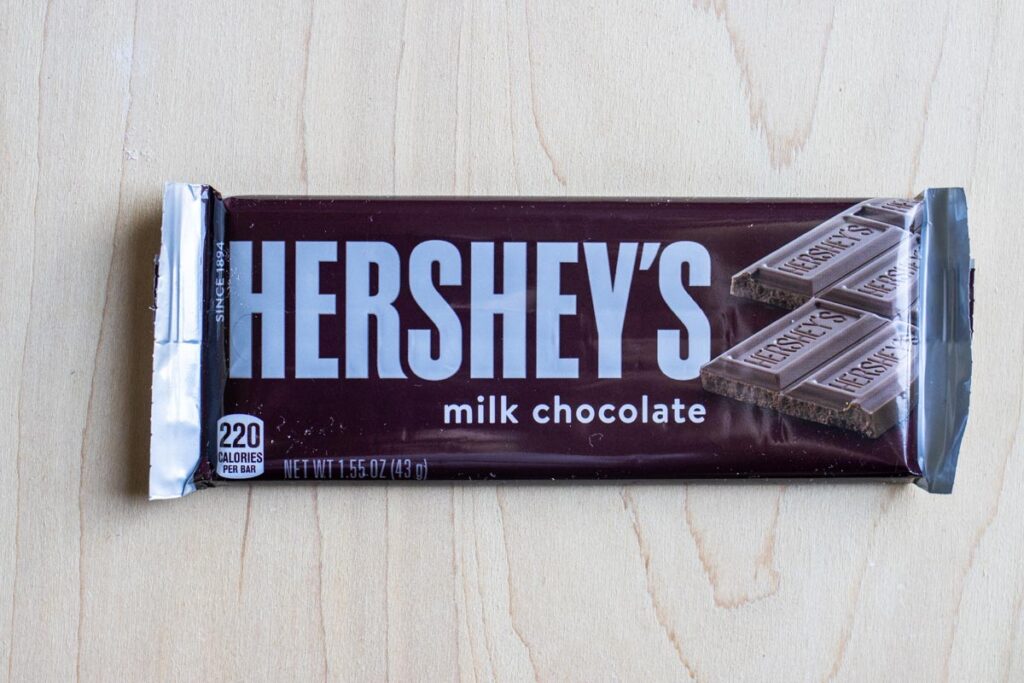

Year Introduced: 1900
Country of Origin: United States
Current Owner: The Hershey Company
The Hershey Bar became Hershey’s most iconic product after Milton Hershey perfected a unique chocolate process that uses milk instead of milk powder. That process has made the Hershey Bar an American institution despite the candy’s slightly sour milk flavor. It also transformed Hershey into a candy juggernaut and one of America’s greatest success stories.
12. Jelly Belly


Year Introduced: 1976
Country of Origin: United States
Current Owner: Ferrara Candy Company
Jelly Belly has come a long way, both literally and figuratively, since the Goelitz candy company produced eight flavors of gourmet jelly beans in Illinois. Those eight flavors were cream soda, grape, green apple, lemon, licorice, root beer, tangerine and very cherry.
Today, the renamed Jelly Belly Candy Company is based in California and sells an ever-growing roster of creative flavors (think buttered popcorn and juicy pear) to candy lovers around the world. It’s fun to guess those flavors, many of which are eerily accurate representations of real foods.
13. Kinder Bueno


Year Introduced: 1990
Country of Origin: Italy
Current Owner: Ferrero International SpA
Kinder Bueno, a wafer candy bar that pairs hazelnut cream with milk chocolate, is a quintessential European candy. Its manufacturer, Ferrero, is Italian while its name combines a German word (kinder) with a Spanish word (bueno), a combination that loosely translates to good children. It’s also a popular gelato flavor in Italy.
14. Kit Kat
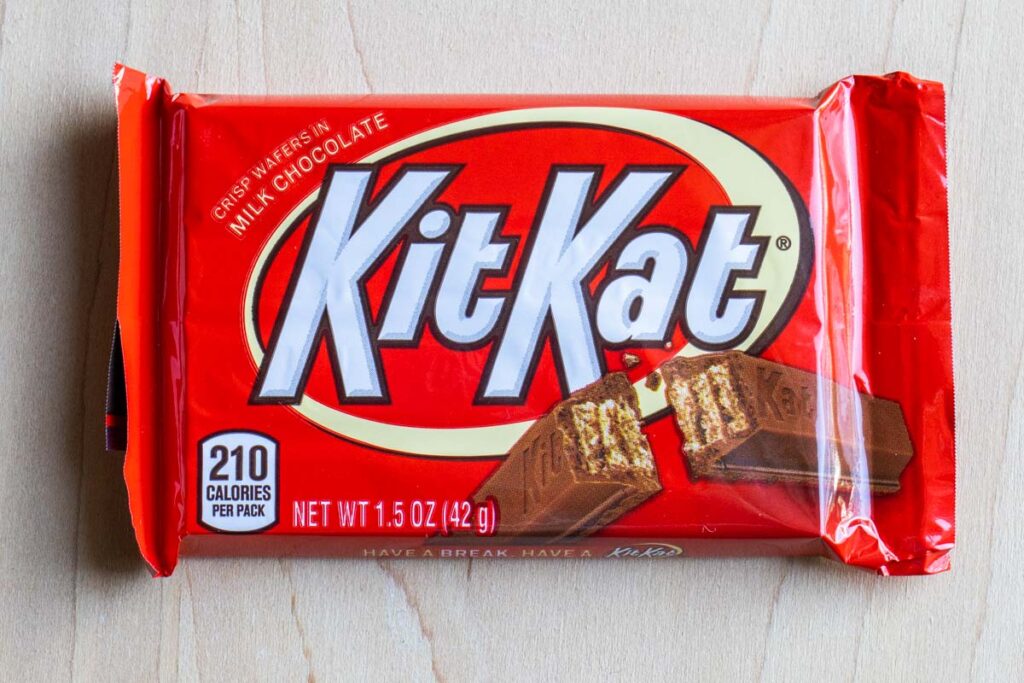

Year Introduced: 1935
Country of Origin: United Kingdom
Current Owner: Nestlé
Originally called Rowntree’s Chocolate Crisp when it debuted, this chocolate-covered wafer bar’s name was quickly changed to Kit Kat. The renamed candy eventually became one of England’s most popular chocolate bars.
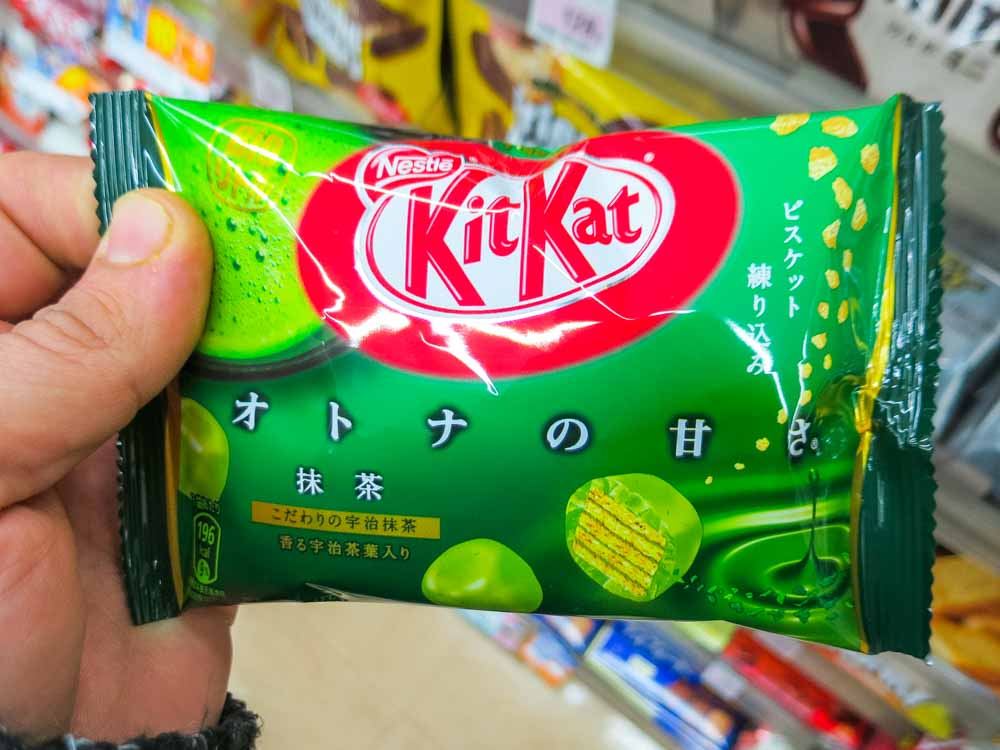
Beyond the UK, the Kit Kat is sold around the world. It’s especially popular in Japan, home to a rainbow of Kit Kat flavors including matcha green tea. The Hershey Company produces and distributes Kit Kats in the US thanks to a licensing agreement that predates Nestlé’s ownership.
15. Kvikk Lunsj
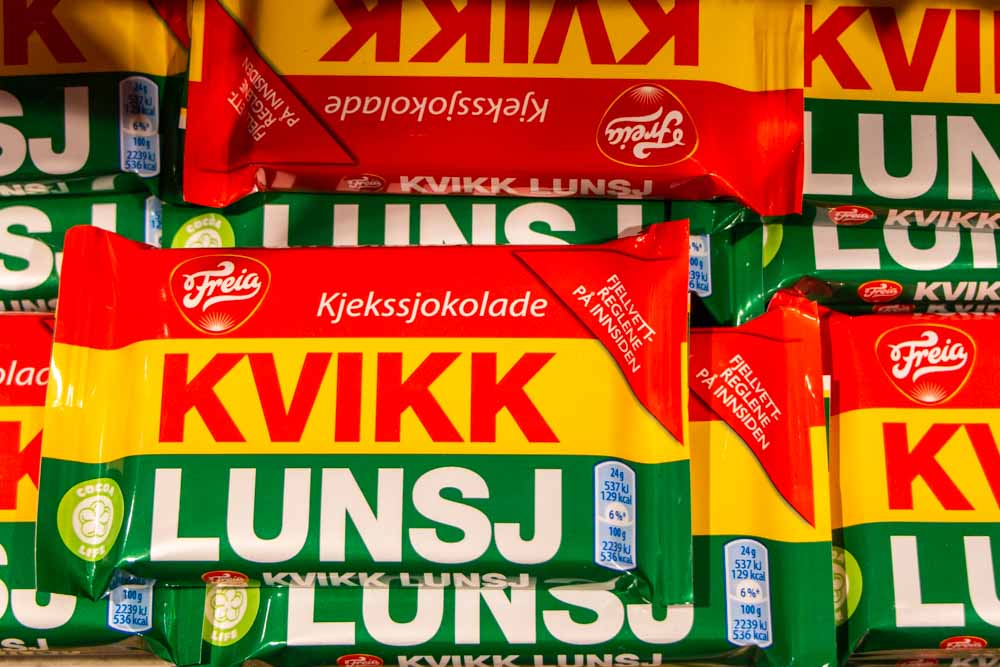
Year Introduced: 1937
Country of Origin: Norway
Current Owner: Mondelēz International, Inc.
Chocolatier Freia introduced Kvikk Lunsj, a four-fingered wafer bar, in 1937, two years after the Kit Kat debuted in the UK. The Norwegian candy bar is so similar to the Kit Kat that Nestlé unsuccessfully tried to ban candy competitor Mondelēz from producing its chocolate wafer bar for the Norwegian market.
After tasting both, we think they aren’t quite the same. The Kit Kat is a bit crunchier while the Kvikk Lunsj is a bit creamier.
16. Lindt


Year Introduced: 1845
Country of Origin: Switzerland
Current Owner: Lindt & Sprüngli
Originally a 19th-century Zurich confectionery shop called David Sprüngli et Fils, Lindt & Sprüngli has morphed into a global chocolate company that creates and sells a range of luxury chocolate products. Some of those products, like the company’s chocolate bars, gold bunnies and Lindor truffles, are candy classics. Others, like Lindt’s multiple Dubai and Tokyo chocolate flavors, are more of the moment.
17. Lotte Ghana


Year Introduced: 1964
Country of Origin: Japan
Current Owner: Lotte Group
Despite its Africa-inspired name, Lotte Ghana is an Asian candy. Its Japanese manufacturer, Lotte Confectionery, was founded by a South Korean entrepreneur. Ghana, the name’s inspiration, is one of the world’s most prolific chocolate-producing countries.
The premium chocolate bar comes in a range of flavors that include black chocolate, matcha chocolate, milk chocolate, pink strawberry chocolate and roast milk chocolate. We tried black chocolate and hope to find roast milk next.
18. M&M’s
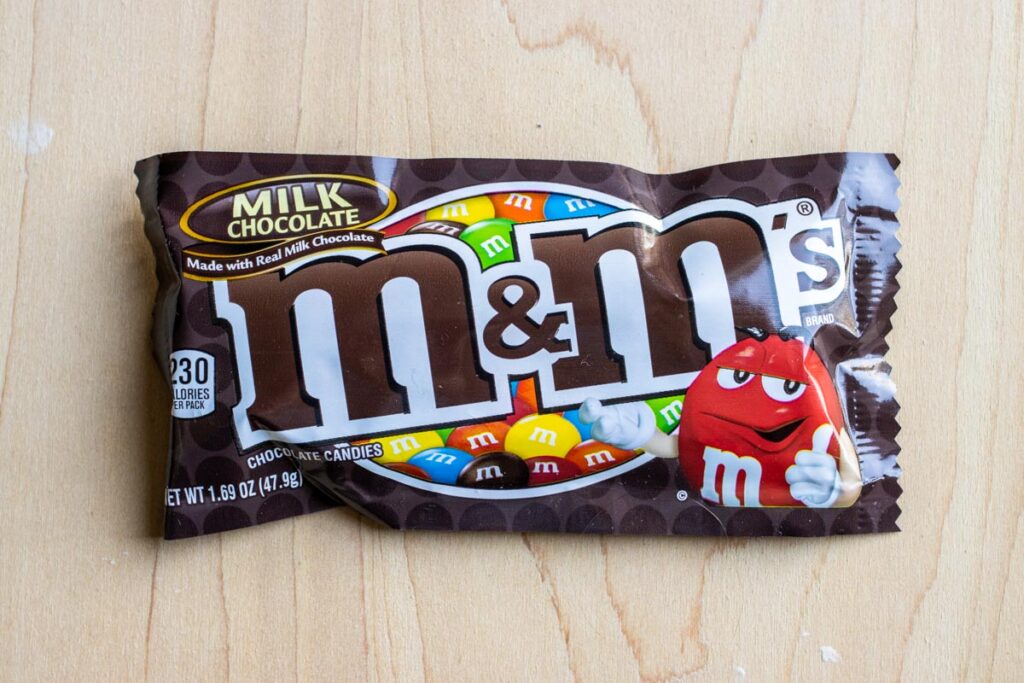

Year Introduced: 1941
Country of Origin: United States
Current Owner: Mars, Inc.
Originally inspired by rations eaten by soldiers during the Spanish Civil War, M&M’s live up to their tagline since they “…melt in your mouth and not in your hands.” Now available in multiple flavors including caramel and fudge brownie, today’s M&M’s would make Forrest E. Mars Sr. and Bruce Murrie (the original M and M) proud. Their colorful, chocolate-filled candy creation ranks as one of the world’s most popular candies.
19. Marou


Year Introduced: 2011
Country of Origin: Vietnam
Current Owner: Marou
Marou takes a true bean-to-bar approach to chocolate. The company buys cocoa beans directly from Vietnamese farmers and then roasts them with care. After transforming the roasted beans into chocolate bars, team members package the bars in gold paper and colorful wrappers.
We first experienced Marou’s excellent chocolate at the original Maison Marou in Saigon in 2016 and again in Hanoi a couple years later. The passion of founders Vincent Mourou and the late Samuel Maruta was as memorable as the Dong Nai 72% single-origin chocolate bar that we purchased. Each bite of that bar revealed a glimpse into the Upper Dong Nai region’s terroir.
20. Meiji


Year Introduced: 1926
Country of Origin: Japan
Current Owner: Meiji Co.
With its original milk chocolate bar, Meiji introduced chocolate to millions of Japanese kids almost a century ago. Fast forward to the present and that milk chocolate bar is still the company’s signature product.
Meiji hasn’t rested on its milk chocolate laurels. It keeps innovating with flavors like almond chocolate and Meltykiss as well as its premium The Chocolate line.
21. Milka


Year Introduced: 1901
Country of Origin: Switzerland
Current Owner: Mondelēz International, Inc.
Originally produced by a Swiss family and named after the German words milch (milk) and kakao (cocoa), Milka has gone global. Now owned by Mondelēz International, it’s mostly made in Germany and sold around the world.
Some things haven’t changed. Milka bars are still produced with alpine milk. Equally important, a purple cow named Lila is still the company’s mascot.
22. Milky


Year Introduced: 1951
Country of Origin: Japan
Current Owner: Fujiya
Created to cheer up children saddened by World War II, Fujiya’s Milky candy has become a Japanese candy favorite thanks to its creamy, buttery taste and fun packaging. Milky’s mascot Peko-chan, with her big smile and cute pigtails, is an iconic character that’s become a fixture in Japanese pop culture.
Milky’s chewy texture reminds us of salt water taffy. However, its milky flavor, derived from Hokkaido condensed milk, is different from the Atlantic City shore candy.
23. Mozartkugel


Year Introduced: 1890
Country of Origin: Austria
Current Owner: Mondelēz International, Inc.
Wolfgang Amadeus Mozart is the most famous composer to have ever called Salzburg home. Beyond music, his legacy lives on in Mozartkugel, a Salzburg candy named after him posthumously.
The round candy is essentially a dark chocolate ball that’s filled with marzipan, nougat and pistachio. Although Mondelēz now produces its Mirabell version in Eastern Europe, decadently delicious Mozart balls are easy to find at bakeries and convenience stores in Austrian cities like Graz and Vienna.
24. Pintarolas


Year Introduced: 1973
Country of Origin: Portugal
Current Owner: Imperial
Portugal’s colorful, chocolate-filled Pintarolas candy is similar to both America’s M&M’s and the UK’s Smarties. But the three aren’t the same. Pintarolas is the only one made without gluten. And, like Smarties but unlike M&M’s, it’s made without artificial colors.
25. Reese’s Peanut Butter Cups
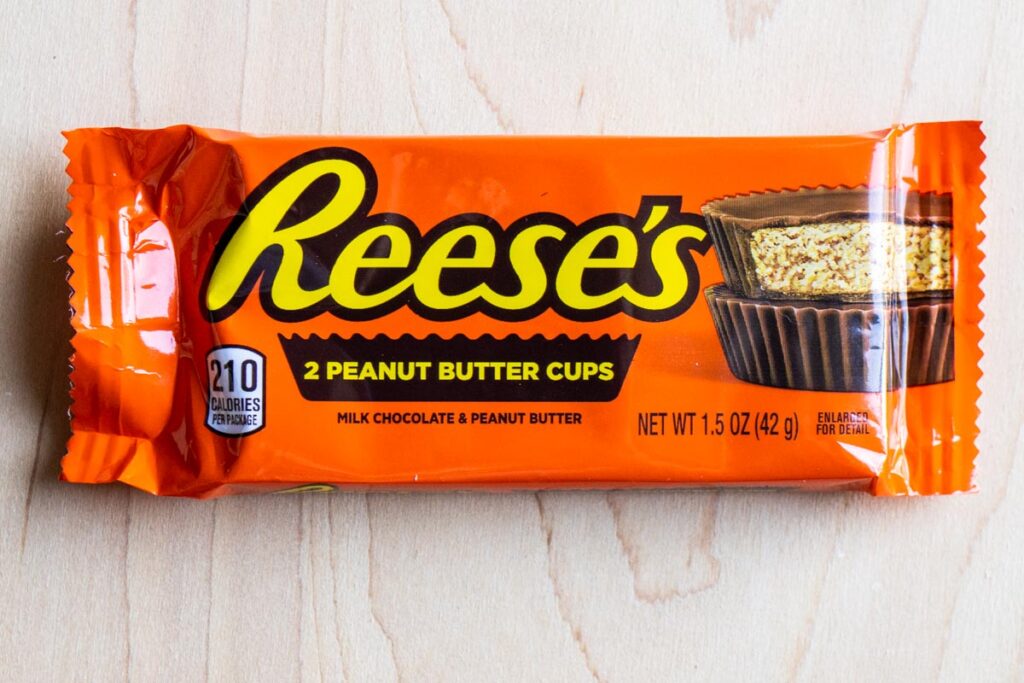

Year Introduced: 1928
Country of Origin: United States
Current Owner: The Hershey Company
Chocolate and peanut butter seems like an obvious pair today, but the combo was novel when Harry Burnett Reese started mass producing peanut butter cups in Hershey, PA almost a century ago. The resulting candy, Reese’s Peanut Butter Cups, is now the most popular candy produced by Hershey’s and one of the most popular candies in the world.
The real trick here is the way the salty peanut butter melds with the confection’s sweet milk chocolate. The result is truly two great tastes that taste great together.
26. Riesen


Year Introduced: 1934
Country of Origin: Germany
Current Owner: August Storck KG
Hugo Oberwelland changed candy history when his company, August Storck, introduced wrapped candy to the German market in 1934. That caramel candy, Storck 1 Pfennig Riesen, was immensely popular throughout Germany back then.
Riesen is still popular, but it’s changed since 1934. Today’s version is a chocolate caramel coated in dark chocolate. In other words, there are now two reasons for chocolate lovers to pop a Riesen into their mouths.
27. Ritter Sport


Year Introduced: 1932
Country of Origin: Germany
Current Owner: Alfred Ritter GmbH & Co. KG
Privately held Ritter Sport stands out from the global pack for a few key reasons starting with its square shape and cleverly engineered packaging. But it’s the variety of flavors that makes Ritter Sport bars special.
We’ve tasted more than 20 flavors including classics like alpine chocolate and marzipan as well as more recent entries like funky white lemon and groovy crunchy bretzel. So far, our favorite continues to be cornflakes for its combination of crispy-creamy textures.
28. ROM


Year Introduced: 1964
Country of Origin: Romania
Current Owner: Kandia Dulce SA
With a wrapper that’s inspired by the Romanian flag and the word București etched on its top, ROM is a patriotic chocolate bar. It also has a unique history: it was the first mass-produced chocolate bar made in Romania and the only one sold there during the country’s communist years.
Although that dark political period ended in 1989, the ROM chocolate bar has remained popular in its home country. Part of the popularity can be traced to an ingenious 2011 marketing campaign that temporarily, and cheekily, changed the candy’s wrapper to feature an American flag. Another part is likely linked to the chocolate bar’s rum-flavored filling. That rum filling isn’t for everybody. One of us loves it and the other not so much.
29. Roshen


Year Introduced: 2002
Country of Origin: Ukraine
Current Owner: Roshen Confectionery Corporation
Previously called the Karl Marx Kyiv Confectionery Factory, Roshen is named after the company’s former owner, Petro Poroshenko. Poroshenko’s name may sound familiar since he served as the Ukrainian president from 2014 to 2019.
The mega company produces hundreds of sweets including Crazy Bee jelly candies and Johnny Krocker wafers. It also produces chocolate bars filled with caramel, creme brûlée, fondant and peanuts. Many are eaten in Ukraine, but plenty are exported across Europe and beyond. We bought the Roshen bar pictured here in Portugal.
30. Schogetten


Year Introduced: 1962
Country of Origin: Germany
Current Owner: Ludwig Schokolade GmbH & Co. KG
The concept of dividing a chocolate bar into individual segments doesn’t seem that special. The folks at Schogetten proved otherwise when they started producing chocolate bars this way more than a half century ago. This extra step quickly became the German candy company’s special sauce.
Schogetten’s classic line includes nutty, fruity, crunchy and creamy bars made with dark, milk and white chocolate. The company also produces limited edition bars and seasonal specials. And, yes, all of the bars are still divided into individual segments.
31. Smarties
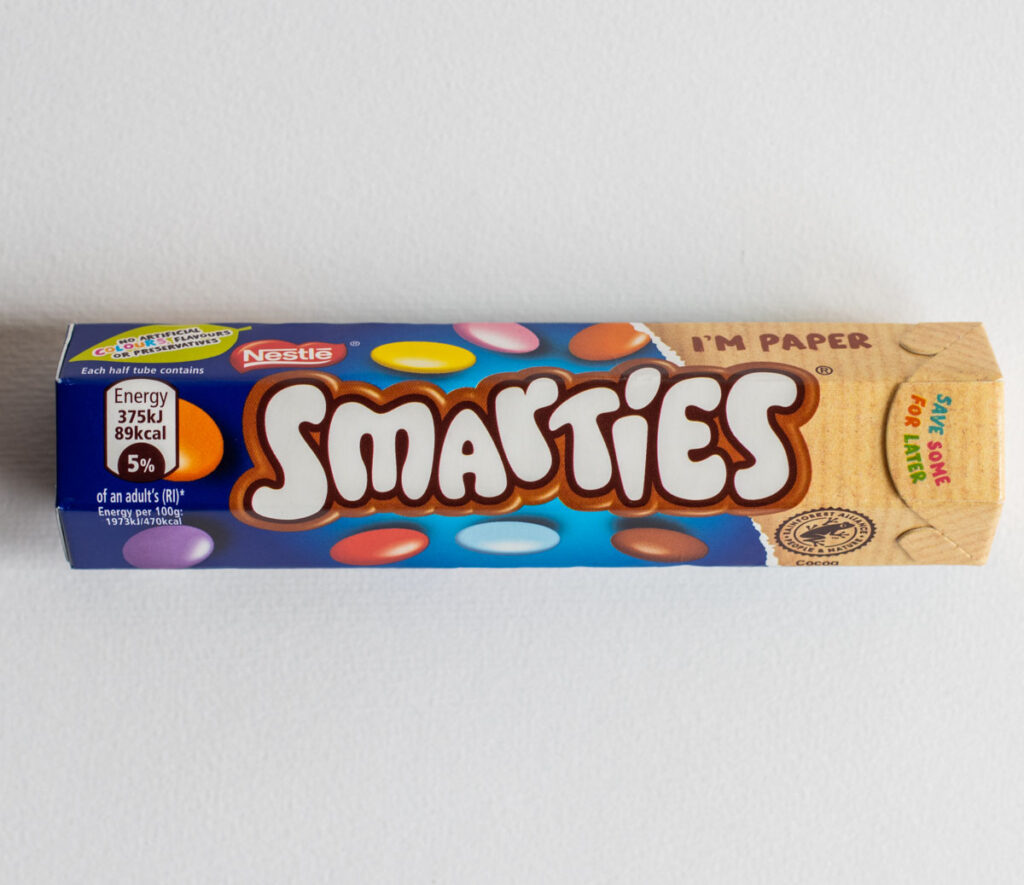

Year Introduced: 1937
Country of Origin: United Kingdom
Current Owner: Nestlé
British Smarties are nothing like American Smarties. The American version is tart, chalky and chocolate-free while the British version is more similar to America’s M&M’s as well as Portugal’s Pintarolas.
Unlike M&M’s and Pintarolas, whose colors all taste the same, orange Smartie shells are flavored with natural orange oil. Other British Smartie colors (i.e., blue, brown, green, pink, red, violet and yellow) have no added flavors. Plus, the standard Smarties container is a recyclable hexatube.
32. Snickers
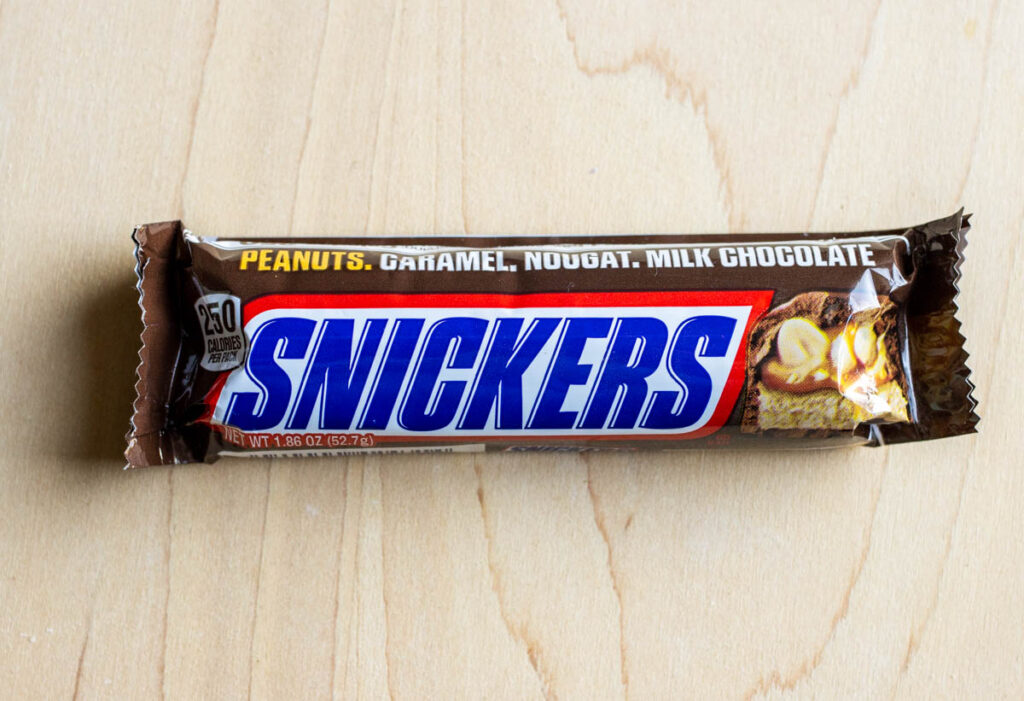

Year Introduced: 1930
Country of Origin: United States
Current Owner: Mars, Inc.
More than just a chocolate bar and nothing like the snickerdoodle cookie, the Snickers bar contains caramel, nougat and peanuts. And not just a random number of peanuts. Each regular Snickers bar has exactly 16 peanuts.
Named after a horse, the Snickers bar has withstood the test of time. It’s Mars’ most popular bar and a top contender for most popular chocolate bar in the world.
33. Swedish Fish
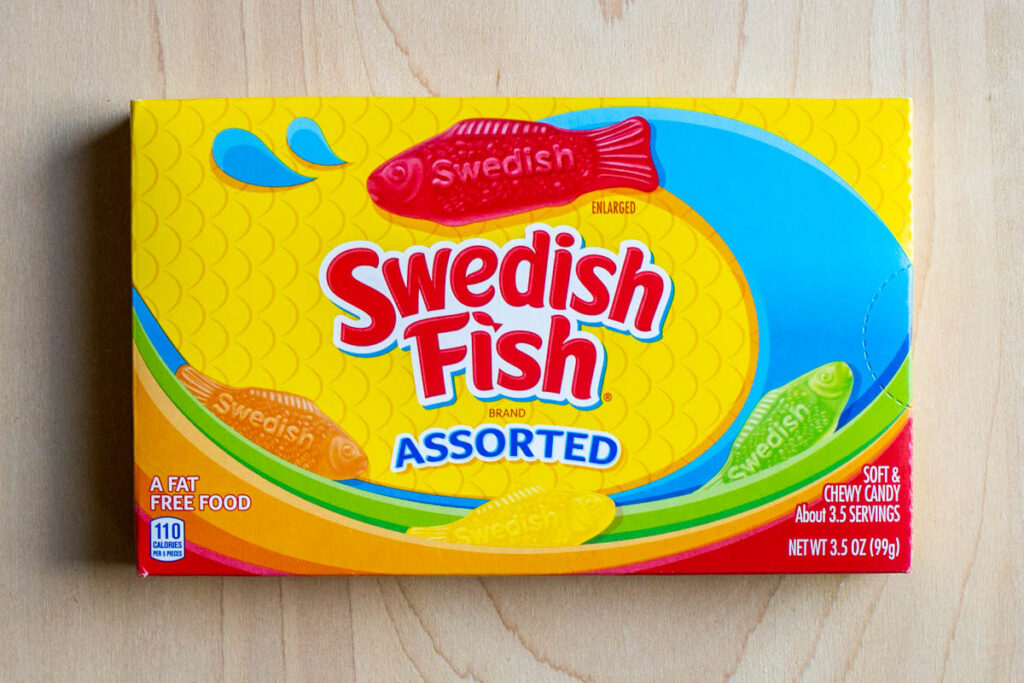

Year Introduced: 1957
Country of Origin: Sweden
Current Owner: Mondelēz International, Inc.
Although Swedish Fish were created for the American market, the colorful fish-shaped candy is popular in Sweden too. However, the two versions differ in two ways.
First, the name is different. Swedish Fish are called pastellfiskar (i.e., pastel fish) in Sweden despite the candy’s bright red, green, orange and yellow colors. Second, the Swedish version includes a black salmiak (i.e., salty licorice) flavored fish that’s not sold in the US.
34. Toblerone


Year Introduced: 1908
Country of Origin: Switzerland
Current Owner: Mondelēz International, Inc.
Plenty of Swiss companies make milk chocolate, but only Toblerone makes triangular bars with almonds, honey and nougat. Its name combines a co-founder’s name (Tobler) with the Italian word for nougat (torrone).
As for the Toblerone bar’s shape, that inspiration came from Switzerland’s Matterhorn mountain.
35. Toms Giant Chocolate Turtle


Year Introduced: 1948
Country of Origin: Denmark
Current Owner: Toms International
Danes like chocolate turtles that are filled with ooey-gooey rum caramel. They like them so much that they apparently eat 41 million Toms Giant Chocolate Turtles every year. That’s a lot of turtles. Or, as they say in Denmark, it’s a lot of skildpadder.
36. Tony’s Chocolonely


Year Introduced: 2005
Country of Origin: Netherlands
Current Owner: Tony’s Chocolonely
Tony’s Chocolonely chocolate bars have catchy names, bright packaging and fun designs. But these chocolate bars are more than they seem. Teun (i.e., Tony) van de Keuken founded the Dutch candy company as a way to combat exploitive practices in the chocolate industry. Van de Keuken previously uncovered these practices while working as a journalist.
Most customers don’t know the brand’s Amsterdam backstory and mission. They just know that they like creative flavors like milk chocolate caramel sea salt (pictured here) and dark milk pretzel toffee. We like them too.
37. Turkish Delight


Year Introduced: 1777
Country of Origin: Turkey
Current Owner: N/A
Turkish delight is a popular candy in Turkey as well as in Eastern Europe, Greece and the Middle East. Produced for centuries with cornstarch and a lot of sugar, the soft candy comes in many flavors including our personal favorites: pistachio and rosewater.
Simply called lokum in Turkey, Turkish delight got its international name from Brits who encountered the exotic candy during their travels. There’s even a British candy bar called Fry’s Turkish Delight that coats rose-flavored gelée with chocolate. Most Americans aren’t that familiar with the candy beyond its role in C.S. Lewis’ The Lion, the Witch and the Wardrobe.
38. Twix

Year Introduced: 1967
Country of Origin: United Kingdom
Current Owner: Mars, Inc.
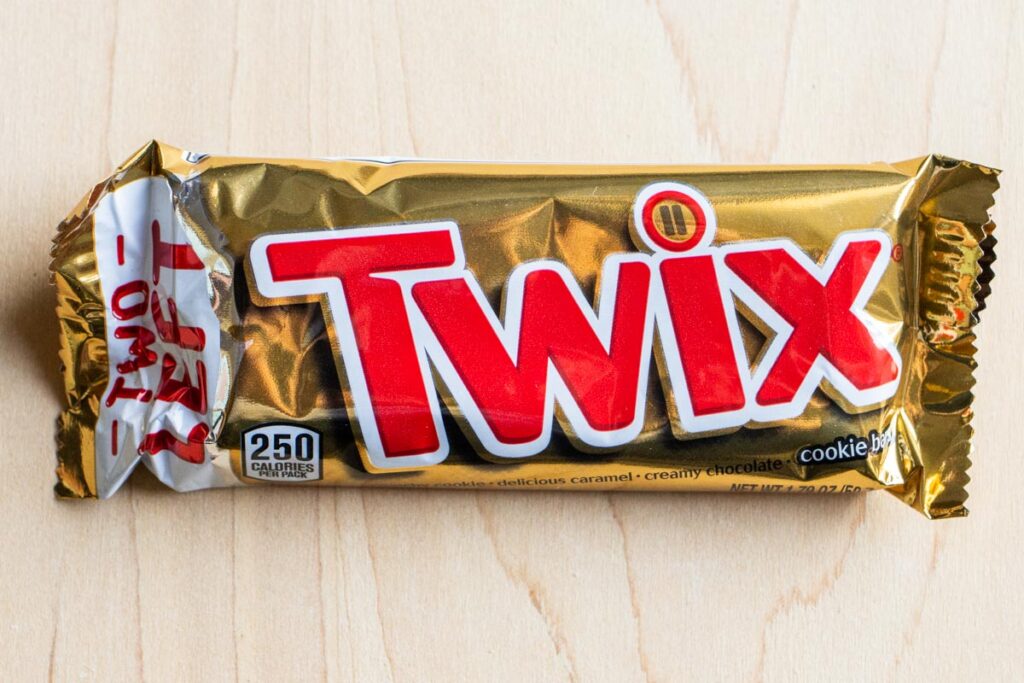
Proving that two candy bars are better than one, each full-size Twix package contains two caramel-topped cookie bars covered in chocolate.
A loose abbreviation of ‘twin biscuit sticks’, Twix has been the candy’s official name in the UK since it debuted in 1967 and in the US since it arrived a decade later. While it was called Raider for years in parts of Europe, it’s called Twix there now too.
39. Wedel


Year Introduced: 1851
Country of Origin: Poland
Current Owner: Lotte Group
Wedel is a top Polish candy brand with a fascinating history. The original owner, E. Wedel, survived devastation during World War II only to be nationalized during the country’s communist years. Once communism ended in 1989, the company was re-privatized before changing ownership multiple times. Wedel’s current owner, the Lotte Group, is one of Asia’s largest confectionery companies.
Today, Wedel sells much of its candy, including an iconic chocolate bar that’s filled with marshmallow, around the world. Its mascot, a boy riding a zebra, is still on the building that houses the oldest Wedel chocolate shop in Warsaw.
40. Werther’s Original


Year Introduced: 1969
Country of Origin: Germany
Current Owner: August Storck KG
August Storck released its signature product six decades after the company started selling confections in Werther, a town in northwestern Germany. Called Werther’s Echte in Germany and Werther’s Original in English-speaking countries, that product is a buttery caramel hard candy.
The nostalgic candy, now made in Halle, is popular with octogenarians on both sides of the Atlantic. The candy company has introduced additional caramel products, including chewy caramels and caramel popcorn, to reach younger fans.
💡 Frequently Asked Questions
There’s no single winner. Our list includes 40 candies from 21 countries, including Cadbury Dairy Milk in the UK and Marou chocolate in Vietnam. We list them alphabetically instead of ranking them. If we had to choose our favorites, Daryl is partial to Ritter Sport bars and Mindi can’t get enough Haribo gummies.
Snickers is widely cited as the world’s best-selling chocolate bar. Mars makes it along with M&M’s, Twix and Galaxy (i.e., Dove in the US).
The 10 most global candies on our list are Cadbury Dairy Milk, Ferrero Rocher, Haribo Gold Bears, Kit Kat, Lindt, M&M’s, Reese’s Peanut Butter Cups, Snickers, Toblerone and Twix.
Turkish delight dates back to 1777. Among the brands, Lindt traces its roots to 1845 and Poland’s Wedel to 1851.
Germany, the UK and the US each have five candies on our list. Switzerland has four and Japan has three.
Mondelēz owns seven candies on our list. Mars and Nestlé each own four, while Ferrero and Hershey each own two.
International grocery stores, specialty candy shops and airport duty-free shops are the best bets. Many of these candies are also sold online.
🎥 Video Recap
🍬 More Candy


📍 Pin This Article


⚙️ Disclosures
Article Updates
We update our articles regularly. Some updates are major, while others are minor link changes and spelling corrections. Let us know if you see anything that needs to be updated in this article.
Funding
We purchased and tasted all candy featured in this article.
