

Mimosa Recipe: Better with Cointreau
This article contains affiliate links. We may receive compensation if you make a purchase using one of these links at no additional cost to you. See our Disclaimers and Terms of Use for more information.


Learn how to make a Mimosa cocktail in just a few minutes. In this recipe, the classic brunch cocktail tastes better with Cointreau.

Sipping a Mimosa has become a pedestrian act. Once a special drink, the sparkling sipper seems to be on every midday menu whether you’re brunching in Paris or at the Paris casino in Las Vegas. Many restaurants even serve bottomless Mimosas, crafted with cheap bubbly and supermarket orange juice, in flutes that fly across dining rooms like frisbees.
As Joni Mitchell sang in Both Sides Now, “something’s lost but something’s gained.” Sure, it’s now easy to drink a Mimosa when you’re out at brunch; however, Mimosas no longer feel so special. The better option is to sip them at home where you can control the drink’s two main ingredients and add a third, Cointreau, to the mix.
🍸 This Recipe at a Glance
- Ratio: 2:1 sparkling wine to orange juice (4 oz : 2 oz) plus a splash of Cointreau
- Glass: Champagne flute
- Method: Built in the glass (orange juice first, then sparkling wine). No shaking or stirring required.
- Garnish: Orange wedge
- Time: 5 minutes
- Strength: Low (about 8% ABV)
- Calories: 90
- Flavor: Bright, citrusy and lightly sweet with a dry, bubbly finish
- Best for: Brunch, Mother’s Day, graduation parties and holiday mornings
What Is the Mimosa Cocktail?

The original Mimosa is a two-ingredient cocktail that’s crafted with equal amounts of Champagne and orange juice and then served in flutes. Sometimes called a Champagne Orange or a Buck’s Fizz, the sparkling wine cocktail has become as much of a brunchtime standard as pancakes and French toast. In fact, it’s practically impossible to find a restaurant without Mimosas on its brunch menu.
While it’s debatable whether the Mimosa or the Bloody Mary gets the dubious distinction of quintessential brunch cocktail, there’s no debate that the Mimosa is the better option for special celebrations like graduation parties and Mother’s Day (sorry Dads). Not surprisingly, sipping a cocktail crafted with orange juice and sparkling wine feels more elegant than drinking one crafted with tomato juice and vodka.
Discover more brunch cocktails.
History of the Mimosa Cocktail

The Mimosa is yet another classic cocktail without a definitive origin story. Some historians credit its creation to Frank Meier, a Prohibition-era bartender in Paris. However, since Meier didn’t take credit for the Mimosa’s invention in The Artistry Of Mixing Drinks, that story is suspect.
Perhaps the true inventor was a French farmer who creatively combined orange juice and Champagne during a picnic lunch in a field of mimosa flowers. Or maybe it was an Italian housewife looking to make her bottle of Prosecco go twice as far. We don’t really know.
We’ve heard rumors that Queen Elizabeth II was a Mimosa fan when she wasn’t sipping gin and Dubonnet. So were Alfred Hitchcock and the female foursome in Sex and the City. We also know that the Mimosa is a drink that’s not going anywhere fast. Unlike its past, the Mimosa’s current status as a popular brunch cocktail is no mystery.
Ingredients

While orange juice and Champagne are non-negotiable ingredients in any Mimosa recipe, our recipe contains a third ingredient plus a garnish:
Ingredient quantities are detailed in the printable recipe card below.

You want to use a dry (i.e., brut) sparkling wine in this recipe since you’ll get plenty of sweetness from freshly squeezed orange juice. French Champagne is the traditional choice, but there’s nothing wrong with using Spanish Cava or Italian Prosecco instead. We typically use Portuguese Espumante when we’re in Lisbon.
Pro Tip
Save your bottle of Dom Pérignon or Veuve Clicquot for another time. The same goes for Moët & Chandon. This Mimosa recipe will taste just fine with a more moderately priced bottle of bubbly.
You may wonder what exactly the Cointreau adds. To us, the French liqueur adds midrange flavor complexity plus an alcohol kick. You could alternatively add a splash of Grand Marnier or Triple Sec if that’s the orange liqueur that you have in your liquor cabinet.
How to Craft a Mimosa Cocktail

This Mimosa recipe diverges from the original Mimosa recipe in two ways. First, it utilizes a 2:1 ratio instead of a 1:1 ratio. Second, it adds a splash of Cointreau.
The first step is to carefully open a bottle of Champagne, Cava, Espumante or Prosecco.


Pour freshly squeezed orange juice into a flute.
Pro Tip
Ramp up your Mimosa by straining a Valencia or navel orange. If you’re in Portugal like us, use an Algarve oranges instead.

Pour sparkling wine into the same flute or wine glass.

Optionally add a splash of Cointreau.

Garnish with a small orange wedge.

Serve immediately while the bubbles are still bubbly.
Variations

Much of the Mimosa’s beauty lies in the simplicity of its two ingredients. However, just like we’ve added Cointreau to our recipe, feel free to make the drink your own. Here are a few ideas to get your creative juices flowing:
Discover 10 essential bar tools for the home mixologist.


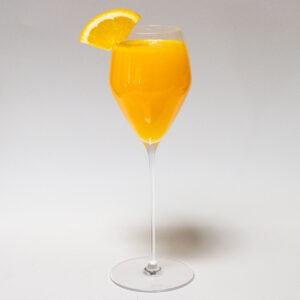
Mimosa Recipe
Ingredients
- 4 ounces sparkling wine (chilled)
- 2 ounces orange juice (freshly squeezed, strained and chilled)
- 1/4 ounce orange liqueur (optional)
- 1 orange wedge (garnish)
Instructions
- Pour orange juice into a flute.
- Top with sparkling white wine.
- Optionally add a splash of orange liqueur.
- Garnish with an orange wedge.
- Serve immediately.
Notes
- You can use Cava, Champagne, Espumante or Prosecco in this recipe.
- If you choose to add orange liqueur, top options include Cointreau, Grand Marnier and Triple Sec.
Nutrition
💡 Frequently Asked Questions
The Mimosa is a classic brunch cocktail that’s traditionally crafted with Champagne and orange juice.
The Mimosa cocktail may have been invented in Paris, but its exact history is a mystery.
Our Mimosa recipe calls for chilled dry sparkling wine, fresh orange juice, an optional splash of Cointreau and an orange wedge garnish.
Dry, brut sparkling wine works best since orange juice and Cointreau provide plenty of sweetness. While Champagne is traditional, Cava, Prosecco and Espumante work well too.
Yes. Triple Sec, Grand Marnier and Cointreau are all good orange liqueur options if you want to add a third ingredient to your Mimosa.
Pour the orange juice into the glass first. Then top the glass with sparkling wine.
Neither! You don’t have to shake or stir the Mimosa. In fact, doing so could reduce the drink’s effervescence.
A standard bottle should make about 6 Mimosas based on a 4 oz pour.


📍 Pin This Recipe


