

Milan Food Guide: 25 Must-Try Dishes and Drinks
This article contains affiliate links. We may receive compensation if you make a purchase using one of these links at no additional cost to you. See our Disclaimers and Terms of Use for more information.


After eating our way through Milan three times, we’re sharing the essential foods and drinks in Italy’s most fashion-forward city. This comprehensive Milan food guide includes traditional Milanese dishes, Italian classics, sweet treats and liquid libations.
Located in Northern Italy, Milan is a city of commerce, culture and design. It’s the home to Leonardo da Vinci’s The Last Supper and it’s where Giorgio Armani and Gianni Versace built their fashion houses. Notable for the legendary La Scala opera house as well as one of Italy’s most stunning cathedrals, Milan is also a city with interesting cuisine.
Milan’s geographic location on the western end of Italy’s Po Valley, just south of Lake Como and the Central Alps, places the city close to rice fields, dairy farms and vineyards. It’s in the heart of risotto country and also on the southern tip of a breaded cutlet belt that runs all the way to Austria and Germany. (Some believe that idea of breading and pan frying meats began in the Lombard capital.) Rich stews like ossobuco are popular in Milan, harkening back to the days of cucina povera.
Planning a Milan Trip?
Book these early. Milan is a popular destination.
- Food Tours: Navigli Food & Drinks Tour with Eating Europe
- Local Experiences: Milan food experiences with locals on Airbnb or the Best of Milan tour with Last Supper tickets with WalksDevour
- Day Trip: Lake Como, Bellagio and Varenna tour with a boat cruise from Milan
- Places to Stay: Hotels at all price points or an Airbnb apartment with a kitchen

In the past, a lot of travelers skipped Italy’s second most populated city in their quest to explore the country’s big three tourist destinations: Florence, Rome and Venice. Some weren’t excited by Milanese food. Maybe that’s based on hearsay and ignorance or the fact that the many Milan restaurants are more about risotto and polenta than pasta and pizza.
While the former provides a basis of the city’s cuisine, the latter has a worthwhile presence. Now, after decades of Italian diaspora within the boot, it’s entirely possible to get good versions of the city’s native cuisine as well as Neapolitan pizza and Southern Italian-style pasta. As for us, we love Milanese food, which, when done well, is some of the best food in Italy. We’re not alone. More and more people are traveling to Milan every year.
The Best Things to Eat and Drink in Milan

We created this Milan food guide with all of the city’s essential foods and drinks. For ease of use, we’ve separated the 25 entries into the following five categories:
Since you can eat Italian food all over the world, we recommend starting with dishes that are unique to Milan. However, we won’t judge you if you choose to eat pizza first instead.
Traditional Milanese Foods

Traditional Milanese foods reflect the city’s history and location. Many dishes are hearty enough to warm a farmer during the cold winter months while others incorporate luxury ingredients like saffron and bone marrow.
These are the local dishes not to miss when you travel to Milan:
1. Ossobuco alla Milanese

Ossobuco alla Milanese is considered a luxury dish on modern Italian menus. This status belies the veal shank’s humble cucina povera origins. Today, the former peasant dish is typically served with either risotto or polenta plus gremolata, a green condiment made with minced parsley, chopped garlic and zested lemon.
To prepare ossobuco, which means bone with a hole in Italian, a large shank bone is cut into steaks. Cooks then slow-cook the steaks into tender meltiness. Sure, they could sell the entire shank (called stinco) but cutting the shank into ossobuco allows diners to have their own special bone marrow treats. Plus, slow cooking collagen-rich veal bones creates a silky sauce.
Where to Eat Ossobuco alla Milanese in Milan
Antica Trattoria della Pesa, Ratanà, Trattoria Madonnina and Other Trattorias
2. Risotto alla Milanese

While Risotto Milanese’s origin stories involve yellow-stained glass church windows, its history isn’t so definitive. Originally imported from Asia, rice was adapted by Italian nobility, like Milan’s Sforzas, to grow in the region’s fertile Po Valley. Risotto alla Milanese developed its flavor and creamy texture over time with the cultivation of medium-grain rices like Arborio. That style of rice contains more starch which contributes to risotto’s creamy texture.
Milan’s famous risotto is typically served as a side dish with ossobuco, providing a rich yellow, starchy complement to the region’s famous bone-centered braised meat dish. How saffron, which adds an intoxicating scent and flavor, ended up in this rice dish is anyone’s guess. It’s believed that the spice made its way through Arab trade routes in the 7th century. While we don’t think it was added by glassmakers, bright yellow saffron was certainly an ostentatious addition that served, and still serves, as a symbol of the city’s wealth and prosperity.
Where to Eat Risotto alla Milanese in Milan
Antica Trattoria della Pesa, Ratanà, Trattoria Madonnina and Other Trattorias
3. Cotoletta alla Milanese

Cotoletta alla Milanese has become so synonymous with breaded and fried meat that countries like Mexico and Portugal have adopted the word Milanese for any meat that’s breaded and fried. However, cotoletta isn’t necessarily the best veal dish to order in Milan. That honor goes to costaletta.
While cotoletta and costaletta are both veal cutlets, costaletta is served on the bone. The best versions are thick and done medium with a juicy consistency. When the meat is gone, there’s a bone to gnaw on at the end, which is a major plus.
Where to Eat Cotoletta alla Milanese in Milan
Antica Trattoria della Pesa, Ratanà, Trattoria Madonnina and Other Trattorias
4. Minestrone

Minestrone is a hearty soup that’s typically eaten at home. While veggie-focused cooks make their soup with seasonal vegetables, tomatoes and beans, meat-focused cooks often add pork to the pot. In our opinion, minestrone tastes great both ways.
It took us three trips to Milan to find a non-touristy restaurant serving minestrone. It was worth the wait. The bowl we finally slurped was loaded with a mélange of tasty veggies that included carrot, celery, onion, peas, pumpkin, Swiss chard and turnip.
Where to Slurp Minestrone in Milan
Trattoria della Gloria
5. Trippa alla Milanese

Similar to Rome’s trippa alla Romana, Milan’s iconic tripe dish is a cucina povera dish that peasants ate back in the day when they couldn’t afford better cuts of meat. Fast forward to the present and the Milanese continue the tradition of cooking tripe low and slow in a tangy tomato sauce laden with beans and pancetta to compensate for the offal’s chewy texture.
Trippa alla Milanese is a dish for adventurous diners. That being said, the version we ate at Osteria del Treno was cooked nicely with a wonderful sauce. Plus, it had an excellent mouthfeel that wasn’t too chewy.
Where to Eat Trippa alla Milanese in Milan
Osteria del Treno, Trippa and Other Trattorias
6. Mondeghili

It’s easy to find polpette (i.e., meatballs) everywhere in Italy except on top of spaghetti. Spaghetti and meatballs is generally an Italian-American dish. One of the country’s tastiest versions is Milan’s mondeghili for a simple reason – these polpette are both breaded and deep-fried.
With roots linked to Spaniards who ruled Milan during the 17th century, mondeghili are fun to eat as both a primi at trattorias and on the go as street food. The traditional mondeghili recipe was a simple affair that included meat scraps, bread and eggs. Modern Milanese cooks have created variations of the dish to include a variety of proteins, including beef, pork and veal, plus cheese and garlic.
Where to Eat Mondeghili in Milan
Antica Trattoria della Pesa, Ratanà, Trattoria Madonnina and Other Trattorias
7. Polenta

A staple in cuisines around the world and not so different from American grits, polenta’s Northern Italian history pre-dates the time when corn made its way across the pond and into the dish. Ancient polenta was made with other grains and beans before cornmeal became the grain of choice.
Some Milanese prepare polenta so that it has a mushy, porridge-like consistency while others cook the dish to a firmer texture that can be grilled. A popular side to serve with ossobuco, polenta is also a great primi, especially when it’s prepared with mushrooms and cheese.
Where to Eat Polenta in Milan
Antica Trattoria della Pesa, Ratanà, Trattoria Madonnina and Other Trattorias
8. Panzerotto

Despite its Southern Italian origin in Puglia, the panzerotto has emerged as a top Milan street food. And why not? Similar to a calzone but smaller and fried, the stuffed dough product is a portable and satisfying meal to eat on the go.
The easiest place to eat a panzerotto is at Luini – the popular spot is a mere stone’s throw from Milan’s epic Duomo. Intrepid explorers will encounter additional panzerotto shops as they traverse the city. Once you choose a shop, the only decision is whether to keep it simple with tomato and mozzarella or to opt for eclectic fillings like ricotta, spinach, salami and even Nutella.
Where to Eat Panzerotti in Milan
Luini and Other Panzerotto Shops
9. Gorgonzola Cheese

Originally produced in Gorgonzola, a town within the Milano metro area, gorgonzola is one of the city’s most popular cheeses. Other contenders include Grana Padano, Robiola, Stracchino and Taleggio. It’s also a cheese with DOP (denominazione di origine protetta) status since 1996.
Cheese lovers can eat gorgonzola during Milan aperitivo sessions. The soft blue-veined cheese pairs well with a variety of wines. And, while polenta and risotto with gorgonzola are classic recipes, the pungent cheese also adds punch to pasta and pizza.
Where to Find Gorgonzola in Milan
Cheese Shops and Aperitivo Bars
10. Panettone

Invented in Milan centuries ago, panettone has become one of the world’s most popular Christmas desserts. However, you don’t have to visit Milan in December to sample the city’s signature dessert – the best Milanese cafes serve panettone all year long.
Less sweet than most Italian desserts, panettone is a puffy round version of brioche. Beyond its eggy, buttery bread base, panettone gets its flavor from ingredients like candied fruit, chocolate chips and raisins.
Where to Eat Panettone in Milan
Cucchi, Marchesi 1824 and Other Pasticcerias
Italian Classics

While eating traditional Milanese food in Milan is a must, the same goes for eating Italian food with roots in other parts of the country. These are the Italian classics not to miss during your visit:
11. Vitello Tonnato

With a history dating back to the 19th century and ties to both Piedmont and Milan, tonnato is a creamy sauce that combines tuna and anchovies with egg yolks, capers and olive oil. And, while the fishy sauce tastes great over chicken, salmon and asparagus, it truly shines when served over thinly sliced poached veal in the classic Italian dish called vitello tonnato.
Finding vitello tonnato on the menu is super easy to do in Milan. We’ve personally found (and eaten) the dish at numerous trattorias. We even found (and ate) a vitello-tonnato-themed pizza in Milan. Yes, we’re that obsessed with the tasty dish.
Where to Eat Vitello Tonnato in Milan
Antica Trattoria della Pesa, Ratanà, Rovello, Trattoria Madonnina, Trippa and Other Trattorias
12. Pizza
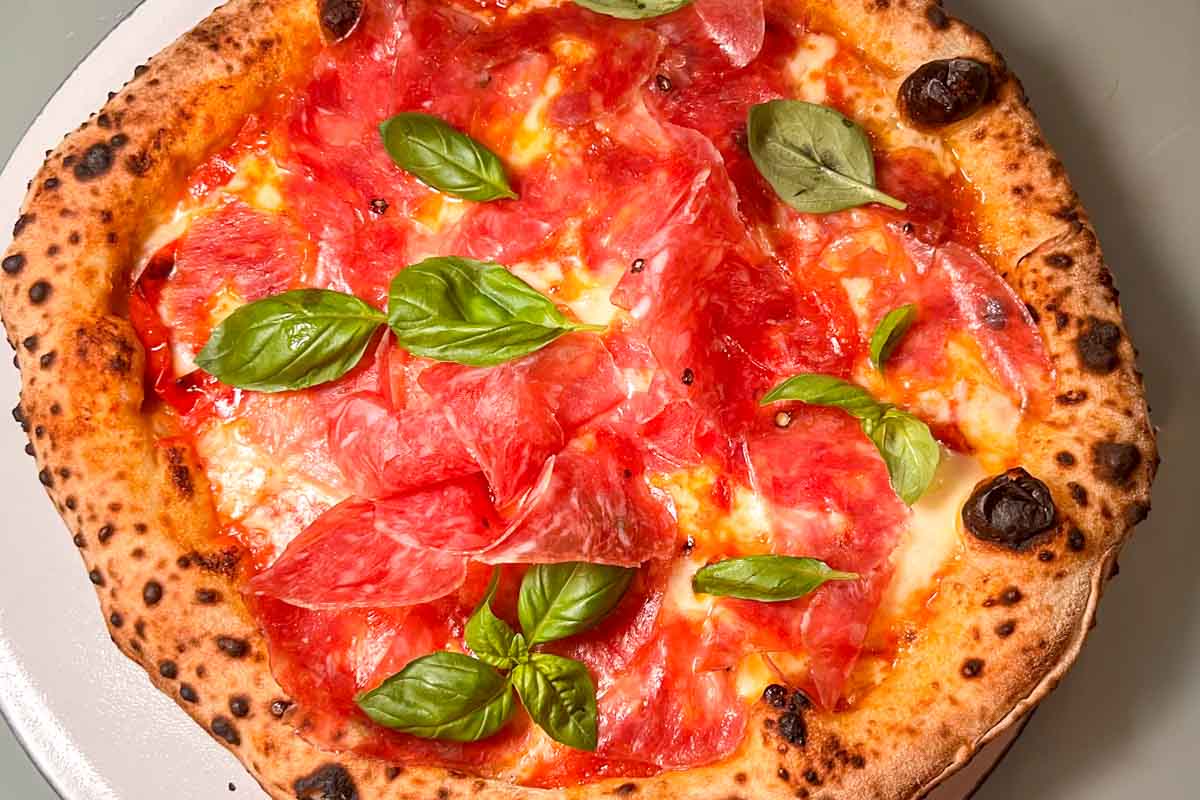
Although pizza wasn’t invented in Milan, the city’s pizza scene is thriving with a diverse range of pizzerias serving top-notch pies. Some of those pizzerias hail from pizza’s home city of Naples while others are unique to Milan. Four rank among the best in the world.
We recommend starting your Milan pizza crawl at Confine, the city’s top-rated pizzeria, where you can order individual pies or opt for a luxurious pizza tasting meal. You can then visit one or more pizzerias based on your level of pizza obsession. Your challenge won’t be finding great pizza in Milan. Instead, it will be saving stomach space for other dishes.
Where to Eat Pizza in Milan
Confine and More Pizzerias in our Milan Pizza Guide
13. Ragù

Dating back to the 1700s, classic ragù incorporates a range of ingredients that starts with a soffritto (a mirepoix of celery, onions and carrots), a small amount of tomato, olive oil, milk, ground meat (beef, pork and veal), white wine and occasionally nutmeg. It’s then served on pasta to create a soul-satisfying dish.
While both Bologna and Naples each claim the dish as their own, ragù is popular all over Italy, including Milan. Many of the city’s trattorias serve savory ragù over a range of pastas that include pappardelle, tagliatelle and more.
Where to Eat Ragu in Milan
Osteria del Treno, Rovello and Other Trattorias
14. Panini

The Milanese have been eating, Italian sandwiches for more than a half century. They make for an affordable lunch and are a great option for workers hustling between meetings as well as for tourists sprinting from one museum to the next.
And, while Milan has plenty of global fast food chains and All’Antico Vinaio branches on its streets, the best option is to grab a panino at a local sandwich shop. The best panini, served on puffy, round michetta rolls, are filled with locally produced meats and cheese.
Where to Eat Panini in Milan
Bar Quadronno, Crocetta, De Santis, Panini Galiano and Other Sandwich Shops
15. Aperitivo

When the day turns to dusk, it’s aperitivo time in Milan. This is the time when Milanese locals stream to bars in neighborhoods like Navigli as well as to classic watering holes like Bar Basso and Camparino. The daily ritual is a fun hang and great way to start the evening with both drinks and food.
The best aperitivo sessions pair wine and spritzes with complimentary nibbles. That being said, there’s nothing wrong with ordering a salumi or cheese plate to go with the free olives and chips. The key is not to eat too much since dinner is right around the corner.
Where to Eat Aperitivo in Milan
Camparino and More Bars in our Milan Aperitivo Bar Guide
16. Cured Meat

Cured meat is as versatile in Milan as it is in the rest of Italy. You can eat cured meat on sandwiches and during aperitivo sessions. It’s also a tasty snack to eat in your hotel room or short stay apartment.
Originally produced in nearby Rho, Salame Milano is Milan’s signature cured meat. It’s an accessible pork product with a mild yet sweet flavor profile. If you only eat one cured meat in Milan, this is the one to eat.
Where to Find Cured Meat in Milan
Butchers and Aperitivo Bars
Global Cuisine

Let’s be real. There’s only so much ossobuco and pizza that one can eat in a week. Luckily, unlike most Italian cities, Milan has plenty of options for those times when you want to eat something different. Those options include American hamburgers, Ethiopian zigni and Japanese sushi. However, Chinese food is the most typical global food you’ll find in Milan.
17. Chinese Food

With a century-old Chinatown and Italy’s largest Chinese population, Milan is a city where it’s easy to cross the fine line between Italian ravioli and Chinese dumplings. The line is so blurry that Chinese dumplings are often called ravioli in Milan. And, while dumplings are omnipresent in Milan, they’re far from being the city’s only Chinese food option.
Chinese restaurants in Chinatown and beyond serve a broad range of Hunan, Mandarin and Szechuan dishes. Some of those restaurants are super casual while others are more upscale. We bumped into excellent Northern Chinese food at Ulan in the hipster Porta Venezia neighborhood. We’re now obsessed with Ulan’s Asian reinterpretation of risotto.
Where to Find Chinese Food in Milan
Ulan and other Chinese Restaurants
Sweet Treats

Italian desserts rank among the best desserts in the world. Beyond Milan’s signature dessert, panettone, these are the sweet treats not to miss when you eat your way around Milan:
18. Brioche

Informed travelers know that croissants are called cornetti in Italy. The most informed know that the flaky breakfast treat is called brioche in Milan.
Brioche is a wonderful breakfast treat that pairs well with either a cappuccino or espresso. Popular brioche fillings include custard, chocolate and all sorts of fruit jam. The sweetest brioche pastries are filled with Nutella and pistachio cream.
Where to Eat Brioche in Milan
Cucchi, Marchesi 1824 and Other Pasticcerias
19. Gelato

Gelato is an Italian food, like pizza, that every traveler is practically required to eat whenever and wherever they’re in Italy. It’s a requirement that we happily follow since Italy’s version of ice cream tickles the tongue with its combination of milk, cream, sugar and a range of fresh fruits and nuts.
Although Milan isn’t famous for its gelato scene, it’s an Italian city with a robust yet refined slate of gelaterias that serve artisanal gelato to the masses. The best ones source seasonal ingredients and create flavors that are both classic and creative.
Where to Eat the Best Gelato in Milan
Gnomo Gelato and More Gelato Shops in our Milan Gelato Guide
20. Tiramisu

Milan isn’t the city where tiramisu was invented. That honor goes to Treviso in Italy’s Veneto region. However, despite that geographic technicality, the layered, creamy, coffee-soaked and powdered dessert is one of the city’s most popular sweet treats.
Finding tiramisu in Milan is easy. Almost every trattoria and osteria has it on the menu. Milan even has a tiramisu boutique, Mascherpa, that serves multiple flavors including mango, matcha, Nutella and pistachio.
Where to Eat Tiramisu in Milan
Mascherpa, Trattorias and Osterias
Drinks

Milan doesn’t mess around when it comes to drinking. Milanese mixologists get credit for inventing multiple amari including Fernet, Fusetti and Ramazzotti. Plus, Milan is the city that Campari calls home. These are the drinks not to miss when you’re thirsty in Milan:
21. Campari

Gaspare Campari invented Campari in Novara, Italy back in 1860 but the Campari Group considers Milan to be its hometown. The multi-national conglomerate even designed the Campari bottle using inspiration gleaned from the stylish city. And, while other liquors were actually invented in Milan, Campari is the city’s signature liquor.
Popular Campari cocktails include the Americano, Campari Spritz, Negroni and Negroni Sbagliato. While you can drink them all during Milan aperitivo sessions, there’s nowhere better than Camparino. Davide Campari (Gaspare’s son) opened the original Camparino in 1915. Its current Galleria Vittorio Emanuele II location is a stunner.
Where to Sip Campari Cocktails in Milan
Camparino and Other Bars
22. Negroni Sbagliato

The Negroni Sbagliato is the most famous cocktail invented in Milan. It’s a bubbly variation of Florence’s Negroni that’s crafted with Prosecco instead of gin. Not surprisingly, Campari is also a key ingredient.
Although the Negroni Sbagliato gained international fame (thanks to TikTok) in 2022, this drink’s history started a half-century earlier at Milan’s Bar Basso. Legend has it that barman Mirko Stocchetti created the original Negroni Sbagliato by mistake when he accidentally poured sparkling wine into a Negroni instead of gin.
Where to Sip Negroni Sbagliato Cocktails in Milan
Bar Basso and Other Bars
23. Fusettone

Also invented in Milan but much newer to the cocktail scene, the Fusettone is a two-ingredient highball that’s crafted with Bitter Fusetti and pink grapefruit soda. The team at Milan’s Farmily Group produces Fusetti, a red bitter, and serves it in Fusettones and other cocktails at its popular bars.
We discovered the Fusettone during our aperitivo session at Iter, a Farmily Group bar located on Via Mario Fusetti. The refreshing cocktail made us temporarily forget about our favorite Italian cocktail – the Campari Spritz.
Where to Sip a Fusettone in Milan
Iter and Other Farmily Group Bars
24. Wine

Natural wine is currently on trend but Milan is a city with a deep vinoculture that pre-dates natural wine by centuries. Much of that vinoculture involves red, white and rosé wines produced in the Lombardy region.
Typical Lombardy varietals include Franciacorta and Nebbiolo, both of which pair well with food. However, it’s easy to find other Italian wines in Milan. Case in point: We drank Tuscan wine at Trattoria della Gloria and Sardinian wine at Ratanà. And, yes, the city has natural wine bars too.
Where to Sip Wine in Milan
Bars and Restaurants
25. Coffee

Darkly roasted espresso is the preferred coffee drink for many in Milan. Then there’s barbajada, a coffee drink with cream and chocolate, that doubles as dessert. We’re not fans of either.
Lucky for us (and you), Milan’s coffee scene is evolving. The team at Orsonero Coffee introduced specialty coffee to the Milanese in 2016. The city now has a burgeoning specialty coffee culture that embraces light and medium roasts, often using single-origin beans sourced from farms in Africa and South America.
Where to Sip Specialty Coffee in Milan
Orsonero Coffee and More Coffee Shops in our Milan Coffee Shop Guide

🌐 Useful Milan Food Travel Info

💡 Frequently Asked Questions
Milan is famous for its costoletta, minestrone, ossobuco, panettone and risotto.
Food in Milan is comparably priced to restaurants in other European cities.
No. Tipping is optional in Italy. Plus, most Milan restaurant bills include a coperto charge.
Anthony Bourdain never filmed a show in Milan.
Stanley Tucci visited La Ca’ di Tencitt, Mag Cafe, Osteria del Treno and Ratanà while filming the first season of Stanley Tucci – Searching for Italy.
People typically eat dinner between 7:00 p.m. and 10:00 p.m. in Milan.
Reservations are necessary at Milan’s better restaurants.

🇮🇹 Milan Travel Checklist
Check out our guide to eating in Italy as well as our picks for the best Italian foods and the best Italian desserts before your trip so that you don’t miss a delicious bite.
🎥 Video Recap


📍 Pin This Article


