

Chicken and Sausage Gumbo: A New Orleans Classic
This article contains affiliate links. We may receive compensation if you make a purchase using one of these links at no additional cost to you. See our Disclaimers and Terms of Use for more information.


If you love eating gumbo in New Orleans, then this chicken and sausage gumbo recipe is for you. Not only is it easy to follow, but the resulting gumbo will warm your heart and fill your belly.

Making gumbo at home has been on our culinary to-do list for years. But first, since we didn’t grow up in Louisiana, we had some research to do. That research involved watching countless chefs make gumbo on TV and studying even more gumbo recipes. We also ate lots of gumbo in New Orleans as well as at New Orleans-style restaurants in other American cities. However, despite all of that research, we were doubtful that our gumbo efforts would be successful.
As it turns out, our fears were unfounded. The first pot of gumbo we prepared at home captured the spirit of its home city and the second pot was even better.
What Is Gumbo?

Gumbo can be classified as a soup or a stew. However, for food lovers around the world, Louisiana’s rich, chocolate-brown version of the dish is pure comfort food that happens to be served in a bowl.
At first glance, Louisiana gumbo belies the concept of pretty food. However, the beauty of gumbo’s muddy mess is the way that it sticks to your ribs. It’s also a homestyle dish that throws traditional French cooking techniques out the window starting with the roux.
In French cuisine, roux is a thickener that’s not intended to be too dark. (The darker roux gets, the less it thickens.) But in Louisiana, deeply caramelized roux is where gumbo derives its flavorful undertones. It’s a bit of a tradeoff, but with the addition of good stock, gumbo can still be thick enough.
When roux is really dark, like the color of dark chocolate, the result is gumbo magic. The key is not to take the roux too far in a quest for gumbo greatness. If that happens, the flour will burn and you’ll have to start over.
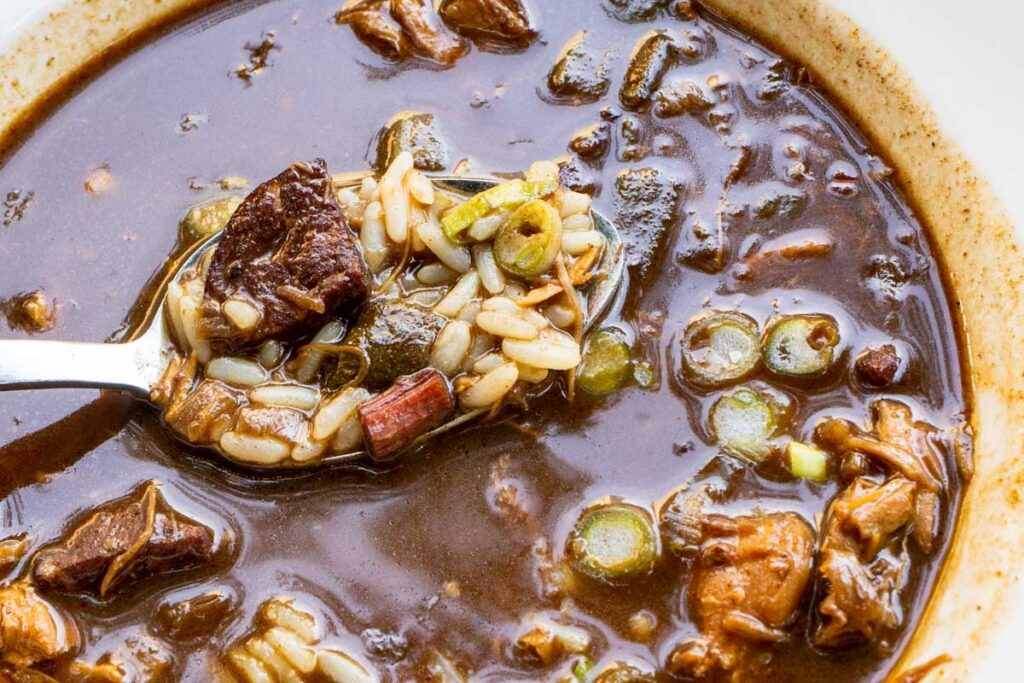
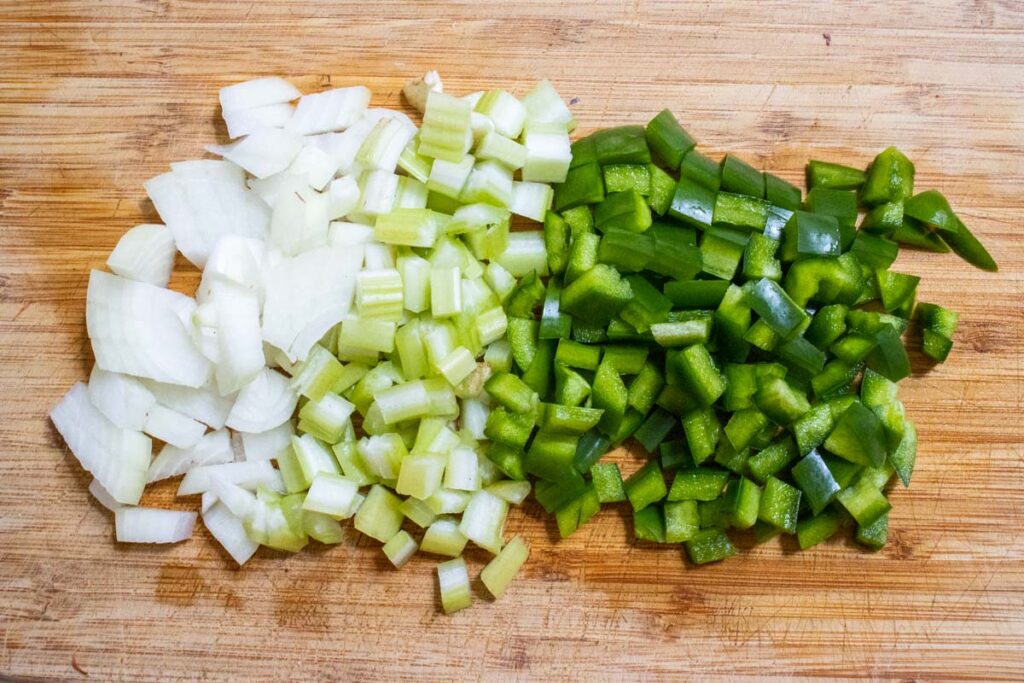
The greatest gumbo we’ve eaten so far? That title goes to Donald Link’s Herbsaint in New Orleans. It was dark – the color of a 75% dark chocolate bar. But it was also super thick and flavored with the pleasantly copper-like Louisiana trinity of onion, celery and green pepper. The blend is singular, evoking memories of streetcars, second-line bands and shotgun shacks.
Some New Orleans cooks controversially add extra ingredients like okra and filé to thicken their gumbo. More on that later.
Our Gumbo Technique
After doing the necessary research, the next step was for us to actually make gumbo. As is the case with most gumbo recipes, ours starts and ends with the roux.
The Roux

The roux is the most challenging element of any Louisiana gumbo recipe. We’ve seen different methods including cooking dry flour in an oven, cooking a combination of flour and oil in an oven and, the most traditional and challenging method, cooking flour and oil on a stove. Always up for a challenge, we chose the traditional stovetop method and it worked. But our path to success wasn’t direct and easy.
Our first attempt, cooking the roux in an enameled cast iron pot over a portable induction burner, was a fail. While the white interior of the pot provided a good background for judging the roux’s color, the material wasn’t adequate for our induction stove. The Dutch oven heated up but it never got hot enough to brown the flour. After over an hour of stirring, our roux was the color of straw.

Our gas stove saved the day. Once we placed the pot on its most powerful burner, the roux turned a rich chocolatey brown.
So, our best advice for making roux? If induction is your best option, use a thick stainless steel pan. If you choose to use enameled cast iron and induction is your only option, consider buying a metal induction plate, which should hopefully speed up the process.
We also recommend using a flat wooden spoon to cook and scrape the roux so that your roux doesn’t linger on the bottom and burn.

Additionally, unless you plan to cook the roux slowly over low heat, we suggest setting the heat on medium-high and staying close to the pot while you stir it constantly. All it takes to ruin your roux is just a little black acridity. You don’t want that to happen. Once your roux is ready, you’ll be ready to add the trinity and stock.
Lastly, for an extra hit of flavor, we browned the chicken, skin on, preceded by the sausage, in the pot before adding the roux. And for an extra hit of flavor, we added a small amount of the rendered liquid fat (about 1/4 cup) to the vegetable oil later in the roux.
The Stock

Some recipes call for either water or quality boxed stock. In a pinch, and with less time, those are fine options. However, we use flavorful stock made with pantry items instead.
We make our gumbo stock with chicken thigh and leg quarters plus aromatics – carrot, celery, onion, parsley and whole black peppercorns. We simply simmer the ingredients for a couple of hours to make a flavorful stock. To us, the extra 1 1/2 to 2 hours cook time is worth it since cooking gumbo is an all-day event either way.
Once the broth is done, we strain it and shred the chicken before starting the roux.
No Spice Mix Necessary
We’re not sure why most gumbo recipes online and on YouTube use various spice mixes and rubs. Maybe the recipe creators are marketing those products to make some extra money. Or maybe they’re competing with Emeril Lagasse’s legacy by taking the flavor ‘up a notch’. Or maybe they feel the need to add chile-based spice rubs to achieve the piquancy associated with Louisiana cuisine.
As far as we’re concerned, good gumbo just needs a little cayenne powder and nothing more. Gumbo is about the way the flavors of the trinity, the roux and the proteins meld together to make a great collage of flavors.
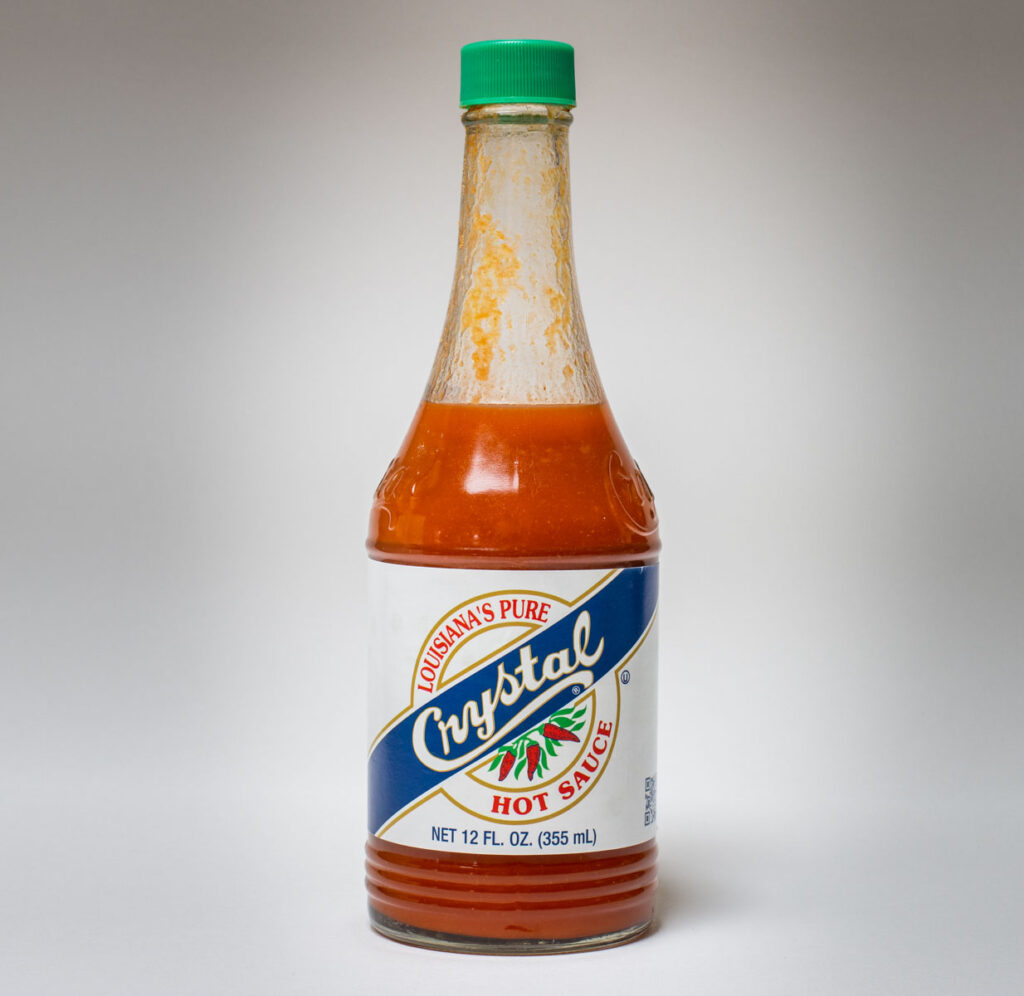
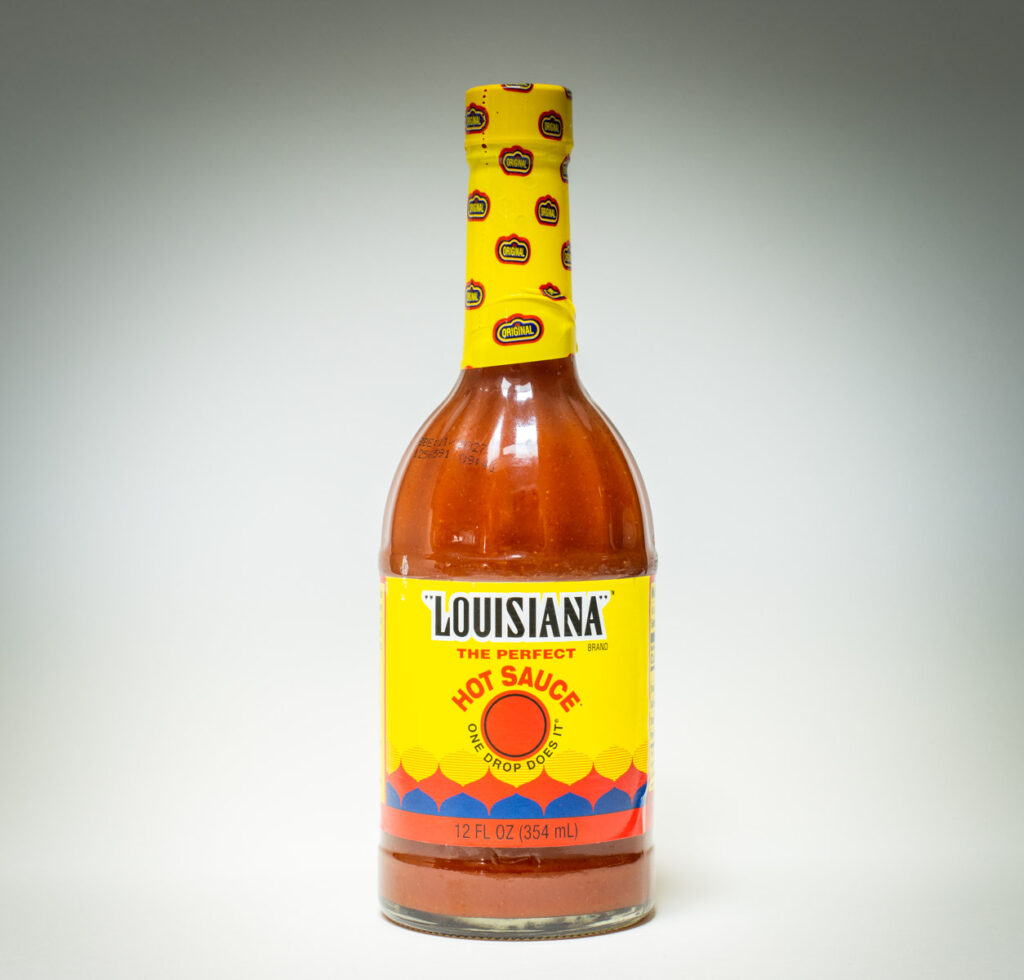
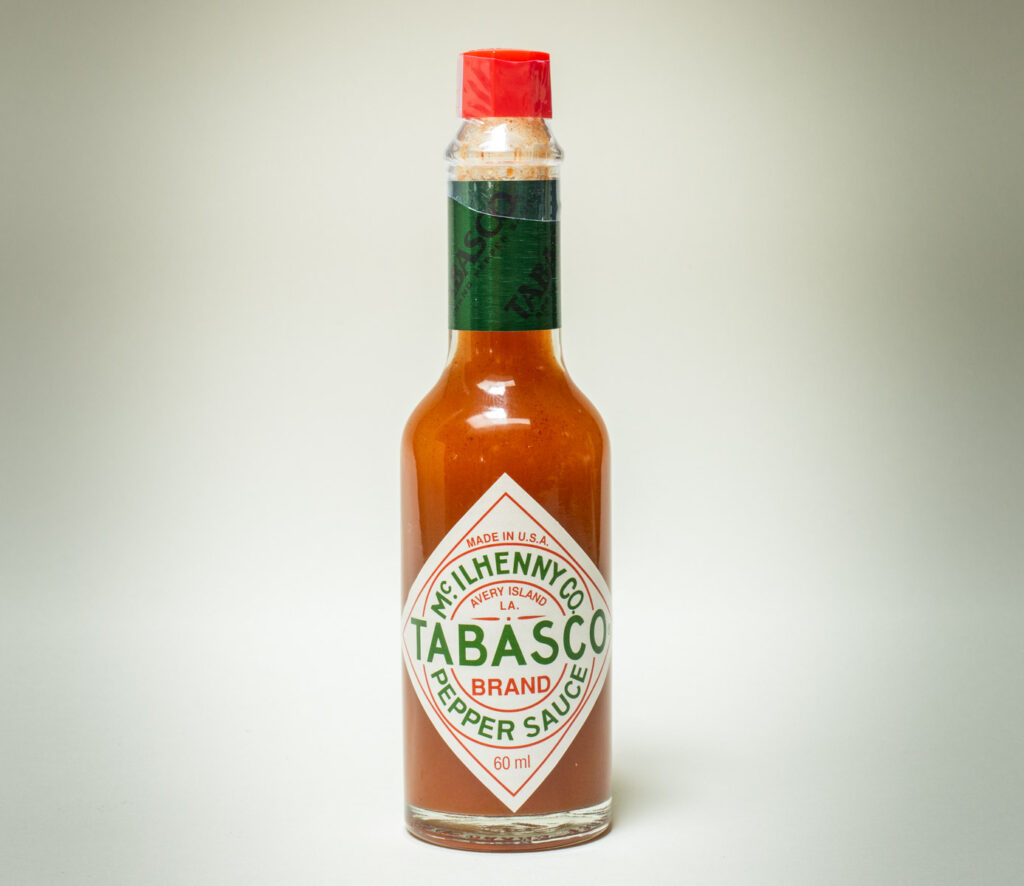
We don’t want to mute those flavors, even a little bit. Instead, for a little acidity, we add a little bit of hot sauce, specifically Crystal, Louisiana or Tabasco, when serving our gumbo. These piquant Louisiana sauces provide a nice wake-up call without muting the gumbo flavors we love.
Gumbo Ingredients

The ingredients for this gumbo recipe create the roux as well as the trinity (Louisiana’s version of mirepoix) and stock. Here’s everything you need.
Ingredient quantities are detailed in the printable recipe card below.
How To Make Chicken and Sausage Gumbo

Start by placing the sausage and a tablespoon of vegetable oil into a thick-bottomed pot, preferably cast iron, over medium-high heat. As the pot heats up, the sausage will begin to brown. Stir and flip the sausage so that it browns on both sides.
Once the sausage is browned, remove it from the pot and set it aside. Place the chicken in the pot, skin side down. Once the skin is browned, flip the chicken and brown the flesh side. Working in two batches so that you don’t overcrowd the pot, it should take about ten minutes to brown the skin side and about two to three minutes to brown the flesh side.


Once the chicken and sausage are browned, pour the remaining liquid fat into a measuring cup. Top the cup with the vegetable oil until you measure exactly one cup. Set the liquid fat aside.

Now it’s time to start the stock.
Place the browned chicken, the celery rib, half of a skin-on onion, the carrot, the parsley and the black peppercorns into a 6-quart stock pot over medium-high heat. Bring the mixture to a simmer, skimming off any fat that comes to the surface. Turn the heat to low and continue to simmer.

Cook the stock for 1 1/2 to 2 hours, skimming any additional fat that forms on the top of the broth during the process. If you have a lot of time you can cook the stock longer. Add water if the liquid in the pot gets too low.
You should have about a quart of broth to add to the gumbo pot. If not, add water to compensate when you add it to the gumbo pot. If you have more stock than you need, you can store the extra stock in the refrigerator or freezer to use later.
Pro Tip
Chop the trinity ingredients and garlic while you cook the stock so that they’re ready when you cook the roux.
Drain the stock through a strainer, set the cooked chicken aside and pour the broth into a pot. Cover the pot and place it over a small fire to keep it warm. Remove the chicken meat from the bones and skin, shred the meat and set the shredded meat aside in a bowl.

Now that your stock is done and your sausage is browned, it’s time to start the roux. But first, make sure your pot is totally clean.
Heat the pot over medium-high heat and add the oil/liquid fat mixture and the flour. Using a flat wooden spoon (preferably) or a whisk, stir the flour/oil mixture constantly until the roux becomes the color of milk chocolate. You can go darker if you feel confident, but be careful, especially if using generous heat, to not burn the roux. If you burn the roux, you’ll need to dump it, clean the pot and start over.


Once the roux is finished, immediately pour in the raw green pepper, celery, onions and bay leaves. Let them cook until tender and then add the garlic. Cook the garlic until fragrant. Add all the stock (plus additional water if necessary).

Cook the gumbo for at least an hour over low heat or until the flavors have melded and the vegetables have fully softened. Add water if the mixture gets too thick. Check and stir the pot every 10 minutes so that nothing sticks to the bottom.
If you choose to add okra, add it about 20 minutes before serving so that it’s just tender. Continue to cook the gumbo until it reaches your desired thickness.

Serve the finished garnish in flat bowls with generous scoops of white rice and your favorite Louisiana hot sauce. You can optionally add filé powder and garnish with chopped scallion for added thickness, color and crunch.

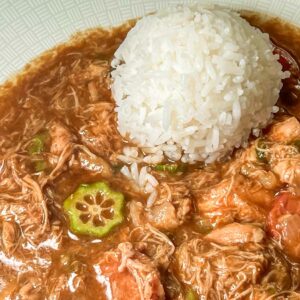
Chicken and Sausage Gumbo Recipe
Ingredients
- 6 chicken leg and thigh quarters (bone in and skin on)
- 1 pound andouille sausage (or another smoked and spiced sausage like kielbasa, sliced 1/4 inch thick)
- 1 tablespoon vegetable oil (for browning the sausage and chicken)
- 5 black peppercorns (for the stock)
- 1 carrot (split, for the stock)
- 1 rib celery (for the stock)
- 1/2 onion (skin on, for the stock)
- 1 stalk parsley (for the stock)
- 3/4 cup vegetable oil (for the roux)
- 1 cup all-purpose flour (for the roux)
- 1 cup celery (diced, for the trinity)
- 1 cup green bell pepper (diced, for the trinity)
- 1 cup onion (diced, for the trinity)
- 2 bay leaves
- cayenne pepper powder (to taste)
- 1/4 cup chicken and sausage fat (from browning the chicken and sausage)
- 3 cloves garlic (minced)
- 1/2 pound okra (sliced 1/4" thick – optional)
- filé powder (to taste, optional for the finished dish)
- 1/2 cup scallions (chopped, optional garnish)
Equipment
Instructions
- Place the sausage and a tablespoon of vegetable oil into a thick-bottomed pot, preferably cast iron, over medium-high heat. Once the pot has heated up, the sausage will start to brown. Stir and flip the sausage so that it browns on both sides.
- Once the sausage is browned, remove it from the pot and place the chicken into the pot skin side down. Once the chicken skin has browned, flip the chicken and brown the flesh side. It should take about ten minutes to brown the skin side and about two to three minutes to brown the flesh side.
- Once the chicken and sausage are browned, pour the remaining liquid fat in the pot into a measuring cup. Pour the vegetable oil into the cup until fat/oil mixture measures exactly one cup.
- Start the stock. Place the browned chicken, along with the celery rib, half skin-on onion, halved carrot, parsley and black peppercorns into a 6-quart pot over low heat. Cook the stock for 1 1/2 to 2 hours, skimming any fat that forms on top of the broth while it cooks. If you have a lot of time, you can cook the stock longer. (Just make sure you add more water so that the chicken stays covered.) You should have about 1 1/2 quarts of broth to add to the gumbo pot. If not, you'll need to add water to compensate. Chances are that you'll have stock left over. If that's the case, you can store it in the refrigerator or freezer to use later for soup.
- Strain the stock through a fine mesh strainer. Set the cooked chicken aside and pour the strained broth into a pot. Cover the pot and place it over a small fire to keep warm. Remove the chicken meat from the bones, skin and cartilage, shred the meat and set the shredded meat aside in a bowl. It's now time to start the roux.
- Make sure your pot is totally clean before starting the roux. Heat the pot over medium-high heat and add the oil/liquid fat mixture and the flour. Using a flat wooden spoon (preferable tool) or a whisk, stir the flour/oil mixture constantly until the roux becomes the color of milk chocolate. You can go to dark chocolate if you feel confident but be careful, especially if using generous heat, to not burn the roux. If you burn the roux, you'll need to dump it and start over.
- Once the roux is finished, immediately pour in the chopped raw green pepper, chopped celery, chopped onion and bay leaves. Let them cook until tender and then add the minced garlic. Cook the garlic until it's fragrant. Add one quart of the stock plus additional water if necessary.
- Cook the gumbo for at least an hour over low heat or until the flavors have melded and the vegetables have fully softened, adding additional water if the mixture gets too thick. Make sure to check and stir the pot, scraping the bottom while you stir, every 10 minutes.
- If you choose to add okra, add it about 20 to 30 minutes before serving so that it's just tender. Continue to cook the gumbo until it reaches your desired thickness.
- Serve in shallow bowls with a generous scoop of white rice and your favorite Louisiana hot sauce. Optionally add filé powder to taste and garnish with chopped scallions.
Nutrition
💡 Frequently Asked Questions
Louisiana style gumbo combines broth with a dark brown roux plus proteins and a trinity of celery, green bell pepper and onion.
Gumbo evolved from a combination of African, Creole and Acadian (Cajun) culinary traditions. The dish is especially popular in New Orleans and other Louisiana cities.
Gumbo starts with a roux before a classic Louisiana trinity of vegetables is added along with chicken stock, proteins and okra.



📍 Pin This Recipe


