

Caipirinha: Brazil’s Favorite Cocktail
This article contains affiliate links. We may receive compensation if you make a purchase using one of these links at no additional cost to you. See our Disclaimers and Terms of Use for more information.


The Caipirinha is so popular in Brazil that it’s the country’s national drink. Learn how to make one at home with just four ingredients.

More than 200 million Brazilians can’t be wrong with their love for the Caipirinha cocktail. But this love is not exclusive to Brazil. Caipirinhas are popular in Portugal too.
Since Brazil was a Portuguese colony for three centuries, the two countries remain intertwined with a shared language and various overlaps in the two cuisines. The boozy Caipirinha is a prime example of where the two countries collide.
Caipirinha Pronunciation
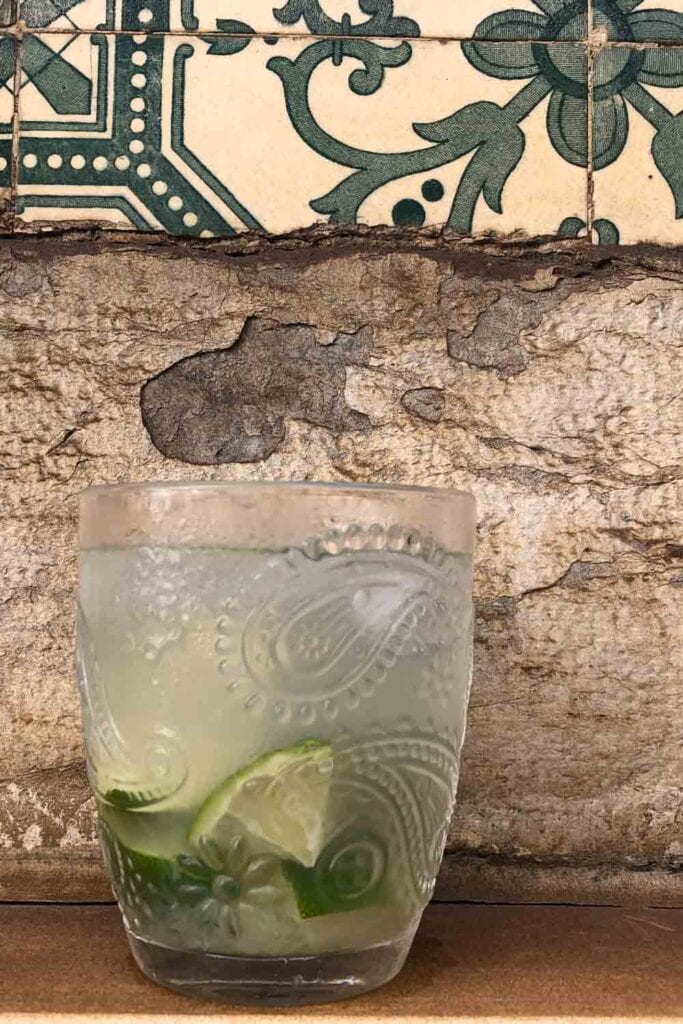
Saying the word Caipirinha is easier than spelling it. According to Merriam Webster, the correct Caipirinha pronunciation is kī-pə-ˈrēn-yə.
Practice saying it a few times before you order your first Caipirinha. Before long, you won’t care about how to pronounce Caipirinha when you order Brazil’s national cocktail.
Our Introduction to the Caipirinha

We had never heard of a Caipirinha before our honeymoon in Portugal back in 2007. This fact is sad but true. However, we made up for lost time at a beach-side Algarve bar in Praia Salema that made fantastic Caipirinhas.
Those Caipirinhas may have been our first Brazilian cocktails but they certainly weren’t our last Caipirinhas. We fell hard for the taste of the potent, sweet and sophisticated cocktail with citrusy undertones that make the sour cocktail rank as one of the ultimate summer sippers.
We mastered the art of crafting Caipirinhas in Philadelphia after our honeymoon. We made Caipirinha cocktails at home in glasses and also whipped up pitchers of the alcoholic elixir when we entertained friends.

We kind of forgot about Caipirinha while we were nomadic. During those three years, we mostly drank wine and beer depending upon where we were located.
Now that we’re based in Portugal, we’ve rediscovered the pleasure of drinking Caipirinhas at Lisbon restaurants as well as at home. The national drink of Brazil is available at most Lisbon cocktail bars, and it’s easy for us to find all necessary Caipirinha ingredients at local Lisbon markets.
What’s So Special About the Caipirinha?

The Caipirinha is one of the most popular drinks in the world; however, many of its fans live in one country – Brazil. Considering that the drink’s main ingredient, cachaça, is a Brazilian product, this makes perfect sense. But what is cachaça?
Cachaça is similar to rum. However, unlike rum, Brazilian distillers produce cachaça with freshly pressed sugarcane juice instead off sugarcane byproducts (typically molasses). The resulting alcohol is an earthier and funkier distilled beverage compared to rum.

Muddling is the step that makes a Caipirinha special. This is when the lime and sugar blend to form a ‘citrus sand’ that you can’t achieve by using simple syrup and a shaker.
If we were forced to compare Brazil’s Caipirinha to another refreshing cocktail, it would be Cuba’s Mojito. Though both of these cocktails involve muddling, the two drinks are quite different. A Mojito recipe includes rum and fresh mint, two ingredients that are not part of the classic Caipirinha recipe.
Ingredients

The beauty of the Caipirinha lies in the simplicity of its ingredients – cachaça, lime, sugar and ice. You likely have three of the ingredients in your fridge and pantry, but you’ll probably need to make a trip to the liquor store to buy a bottle of cachaça.
Ingredient quantities are detailed in the printable recipe card below.

Is the Caipirinha Strong?

Let’s cut to the chase… the Caipirinha is as strong as it is tasty.
Cachaça, the main ingredient, has a relatively low ABV of 38-48% per Brazilian law. The bottle we bought is no exception with its 38% ABV. However, the other Caipirinha ingredients don’t dilute the potency by much.
Pro Tip
Add additional ice or a splash of club soda if you want to drink a few Caipirinhas without getting intoxicated. However, do NOT drive even if you just drink one of these potent potables.
Variations

The basic recipe for a Caipirinha is incredibly simple to make with just four ingredients and no special tools required besides a muddler. You don’t even need a shaker to make this drink in just five minutes.
Once you master this easy Caipirinha drink recipe, you can modify it by replacing limes with other fruit like passion fruit, mango and pineapple. These fruity variations are called Caipifruta cocktails in Brazil.

Should you run out of cachaça, you can use rum or vodka instead. In Brazil, the rum version is called a Caipiríssima and the vodka version is called a Caipiroska.
However, we recommend that you learn how to make a classic Caipirinha before you try these variations. If you follow our recipe, you’ll be good to go after a session or two.
Discover 10 essential bar tools for the home mixologist.
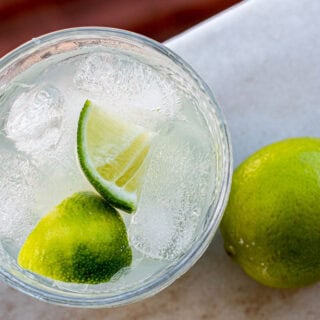
Caipirinha Recipe
Ingredients
- 3 ounces cachaça
- ½ large lime
- 4 teaspoons granulated sugar
- ice cubes (cubes or crushed)
Instructions
- Wash lime and cut in half. Put one half aside and cut the remaining half into 4 wedges.
- Place lime wedges and sugar into a lowball glass and muddle until thoroughly mixed.
- Add cachaça and ice cubes.
- Gently stir.
Notes
- You can adjust the sugar amount to modify the sweetness level.
- You can add extra ice cubes to dilute the Caipirinha.
Nutrition
💡 Frequently Asked Questions
The Caipirinha is a muddled cocktail crafted with cachaça, lime and sugar. It’s also the official drink of Brazil.
The Caipirinha and Mojito are both popular summer sippers. The Caipirinha is crafted with cachaça, lime and sugar, while the Mojito is crafted with rum, mint and sugar.
Caipirinha is pronounced as follows: kī-pə-ˈrēn-yə.
Cachaça, Lime, Sugar and ice
Cachaça is the only liquor used to craft a Caipirinha.
Cachaça is a sugarcane juice liquor.
The Caipirinha is muddled and stirred.
We use a lowball glass when we craft this cocktail but you can use a highball glass instead.


📍 Pin This Recipe


