Inside the Original Tsukiji Market in Tokyo
This article contains affiliate links. We may receive compensation if you make a purchase using one of these links at no additional cost to you. See our Disclaimers and Terms of Use for more information.
Discover what it was like to visit the Tsukiji Market in Tokyo before the famous fish market relocated in 2018.
We had traveled the length of the country with short stops in Chicago and LA, and it was finally time to step back into the “Asia Portal.”
The Asia Portal is not for the meek or the faint of heart. Travel to the Asia Portal requires endurance and an open mind. It also mandates a plan, and, when that goes awry, a certain amount of nimbleness as a world traveler. Our last venture through the Asia Portal took us to China.
This time we were going to Japan with our first stop in Tokyo.
This particular entry into the Asia Portal required two United flights that hurtled us across the length of the United States to Los Angeles where an ANA 777 plane launched us across the International Date Line.
We were headed to Japan where the future is now – a land where derivation meets the highest levels of refinement to create a culture that is utterly original. Japan is the land of the rising sun, the home of sushi, the epicenter of ramen, the capital of tempura, the bastion of yakitori and also the home of an inordinate number of Michelin starred restaurants and French patisseries.
We arrived at Haneda Airport in the southern outskirts of Tokyo at 5 am. We stepped onto the monorail and arrived at Tokyo station early enough to secure day lockers for our somewhat large rolling suitcases. As we walked, the city was asleep and the streets of the upscale Ginza neighborhood whispered quietly.
However, one nearby landmark beckoned us with the hustle-bustle of forklifts and motorized carts steering around each other in recklessly choreographed motion. The vehicles moved with purpose for good reason: the product they were transporting was the freshest seafood in the world
Yes, within two hours of our arrival in Tokyo, we hightailed it to The Tokyo Metropolitan Central Wholesale Market, otherwise known as Tsukiji Market.
Why We Visited Tsukiji Market
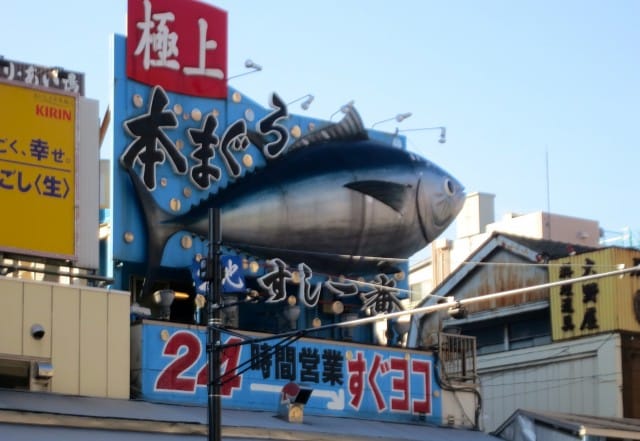
The sprawling Tsukiji Market had a dizzying selection of fish and seafood for sale at stands and in its daily early-morning auction. Plus, the market was a great place to enjoy a sushi breakfast.
Prior to its relocation, this famous market was recommended in every Tokyo tour book. Without a doubt, a trip to Tsukiji Market was a must for all Tokyo visitors, especially those who love sushi.
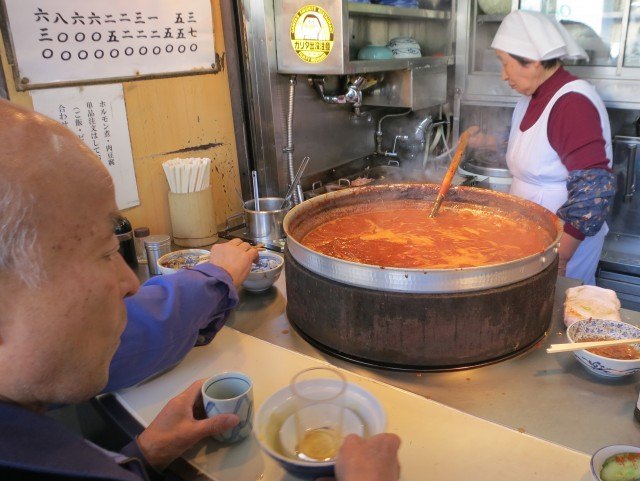
During our visit, we wandered through the outer market, perusing the various food and produce stands along with food stalls where market workers and Tokyoites were enjoying various local specialties so early in the morning.
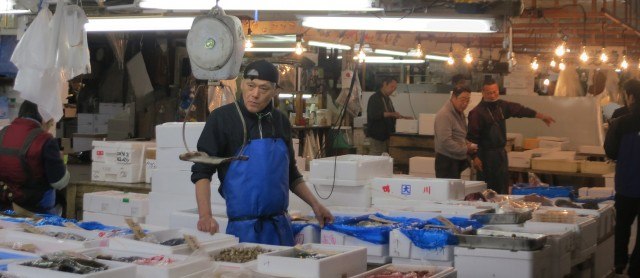
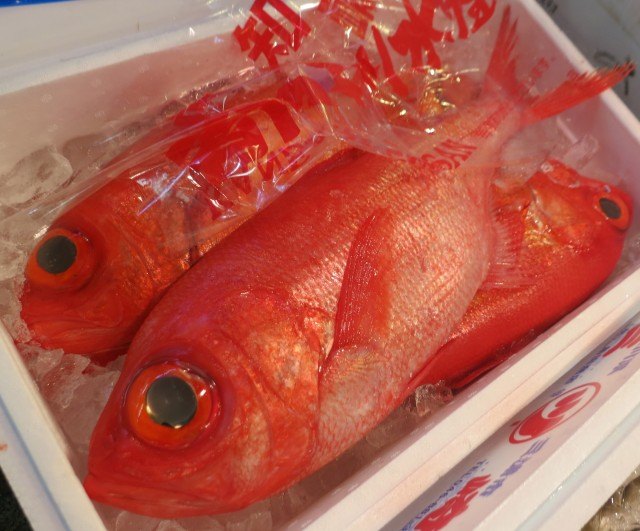
We then ventured into the heart of the market, where we saw fish sales in action. The freshly plucked octopus, bluefin tuna, clams, shrimp and salmon astounded us with their big, shiny, clear eyes and muscular, firm flesh. Even though we weren’t on a guided tour, we were still able to soak it all in.
Sushi Breakfast at Tsukiji Market
Sushi restaurants abound all over Tokyo, and some of the very best places such as Jiro Ono’s restaurant Sukiyabashi Jiro are inordinately expensive demanding up to $300 a person for an omakase (prix fixe) menu. However, there’s still amazing fish to be found at affordable prices.
Some of these popular sushi counters like Sushi Dai feature customers lined up around the block, waiting as much as two to three hours or more to for breakfast. But there are still many establishments with lower profiles that serve fish that is equally excellent.
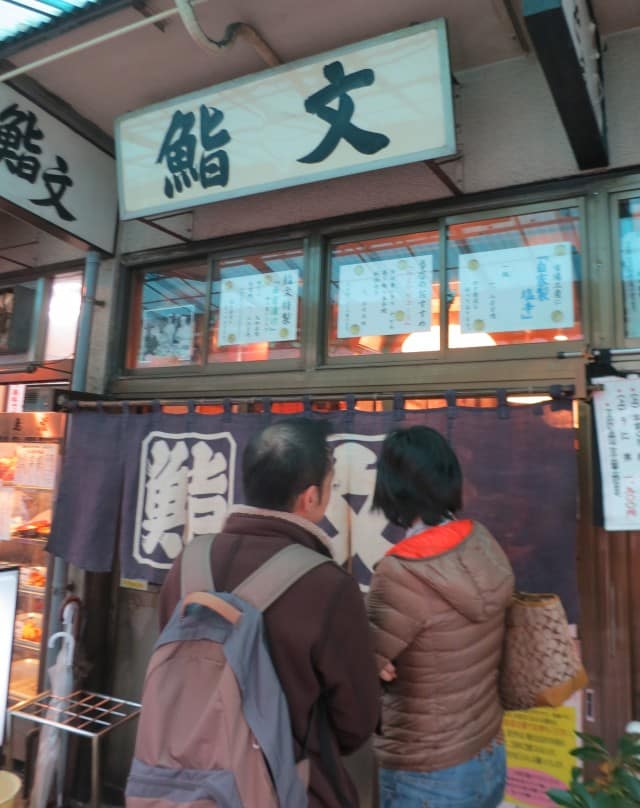
We chose to eat our Tsukiji Market sushi breakfast at 150-year old Sushi Bun 鮨文 in building 8. Although popular, the lines were humane. The wait was about an hour on the busy Saturday when we arrived; however, the wait was virtually non-existent on our return later in the week.
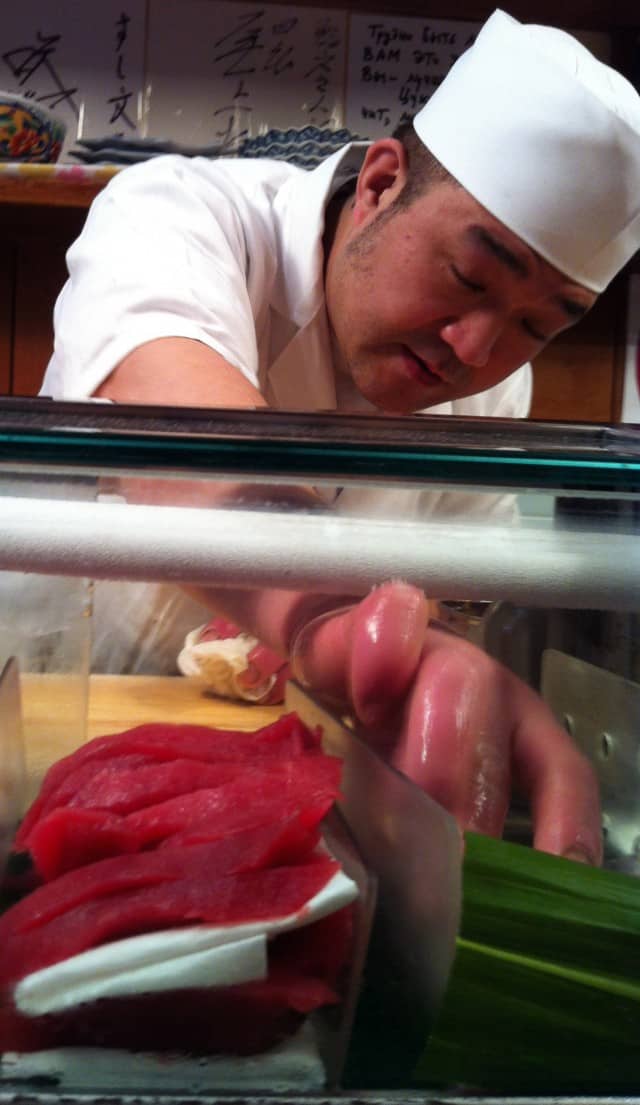
We ordered two different tastings in order to sample a wider variety of fish. The cost of the two tastings averaged about $30 per person. Once seated, we were served fish on bamboo leaves, about three pieces at a time.
Like many sushi restaurants in the United States, our sushi was accompanied by miso soup. However, to our pleasant surprise, Sushi Bun’s miso soup featured baby cockles that complimented the earthy flavors of the soy miso with the fresh briny flavors of the ocean.
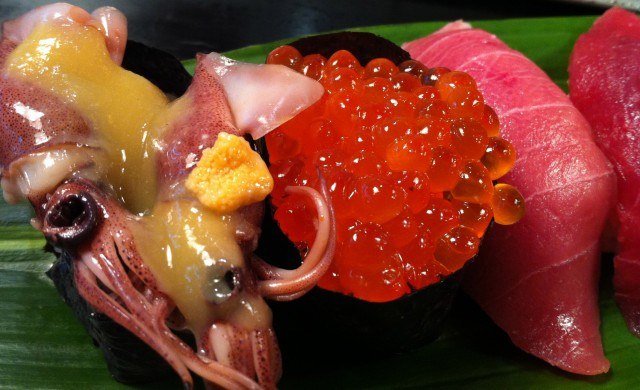
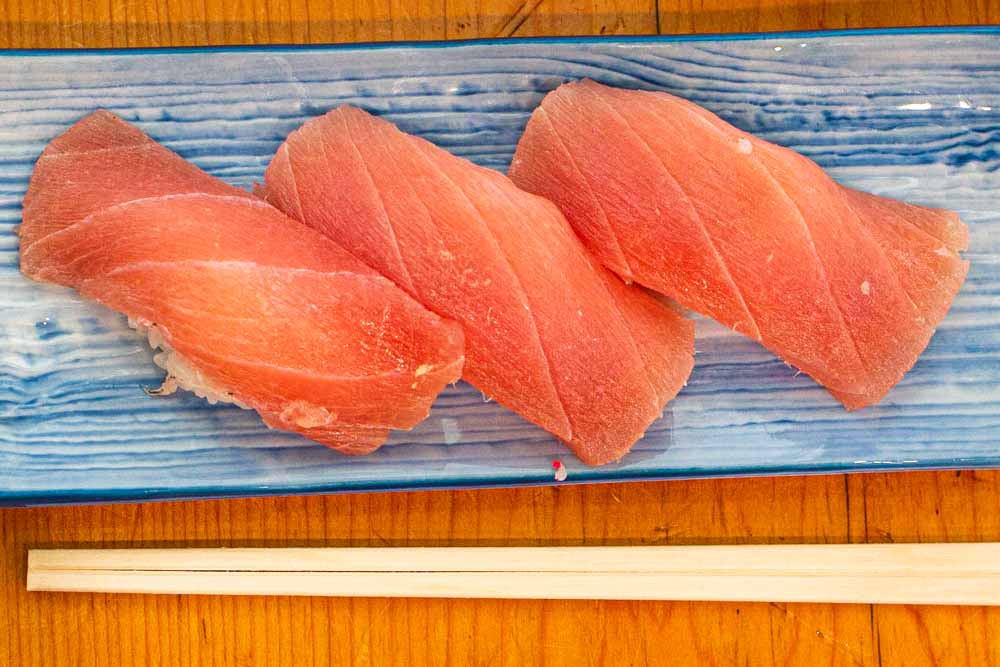
Then our nigiri sushi started to arrive – luscious pieces of maguro (lean tuna), toro (tuna belly) and otoro (fattiest tuna belly) as well as baby octopus with a dollop of miso, uni (delectable sea urchin) and ikura (mouth-popping salmon roe).
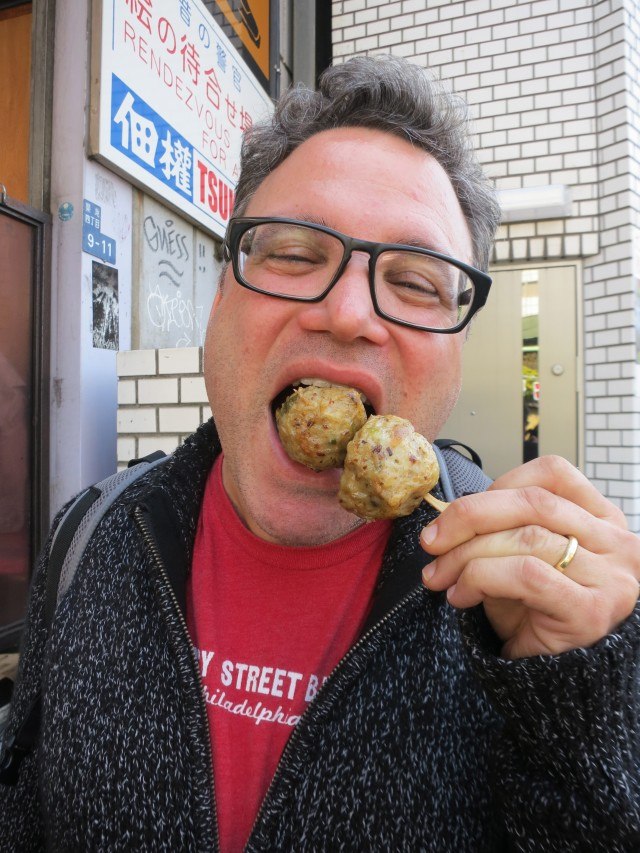
As we left the market, we breathed in the scents of the soups and other Japanese delicacies. Then we shared fish meatballs on a stick.
If we lived in a city with a world-class market like Tsukiji, perhaps we could give up meat. Perhaps. Either way, we’d be eating a heck of a lot of delicious sushi.
🇯🇵 Tokyo Travel Checklist