

Basil Pistachio Pesto: Easy and Delicious
This article contains affiliate links. We may receive compensation if you make a purchase using one of these links at no additional cost to you. See our Disclaimers and Terms of Use for more information.


Basil pistachio pesto is a tasty variation of the traditional basil pine nut pesto that we all know and love. It’s easy to make and pairs well with mortadella. After you make it once, you may never make pesto with pine nuts again.

We love the combination of mortadella and pistachio and we’re not alone. Italians in Bologna have been producing mortadella studded with pistachio for over a century. When we were last in Naples and surrounding Campania cities, we couldn’t stop eating pizzas topped with mortadella and pistachio pesto. Once we got home, we decided to try the combination with pasta.
But first, we had to learn how to make pistachio pesto. In lieu of starting from scratch and running test after test, we took the easy route and modeled our basil pistachio pesto recipe after Marcella Hazan’s touchstone pesto recipe. We found the recipe in her iconic cookbook Essentials of Classic Italian Cooking. It’s a book that we use often. It’s our ‘bible’ for cooking Italian cuisine.

Hazan offers two variations of her classic Ligurian-based pesto recipe: one method using a food processor and the other using a mortar and pestle. While it’s certainly easier to make pesto in a food processor, we chose to go ‘old school’ and embrace the mortar and pestle method. While the food processor produces an excellent product, the flavor difference between the two methods is striking.
The mortar method produces a pesto that’s dramatically flavor forward with complex flavors of basil, garlic, olive oil and cheeses remarkably present. Sure, it takes a little more elbow grease, but with the right equipment, using a mortar and pestle produces a product that rivals any Genovese grandma’s pesto. And, with the substitution of pistachios, the pesto is as green as a spring meadow. That being said, if you’re keen to use a food processor, we provide instructions for that method too.
Ingredients

While any Italian kitchen should have the ingredients for making basil pistachio pesto, you may need to buy one or more of the following items:
Ingredient quantities are detailed in the printable recipe card below.
How To Make Basil Pistachio Pesto

This recipe, if you’re using the mortar and pestle method, requires a bit of elbow grease and patience. However, once the pesto comes together, it’s a glorious thing. The key is to have a good mortar and pestle.
There are two keys to a good mortar and pestle: 1. The mortar needs ample space so the ingredients don’t fall over the rim. 2. The pestle needs good weight to crush the ingredients.
We were lucky to receive a Milton Brook 6 1/2″ mortar and pestle as a gift many years ago. It has a wide bowl, a stain-resistant surface and a stone pestle with plenty of weight. If you’re looking to buy a mortar and pestle, this one may seem pricey but it’s highly versatile and will last for years.

Start the recipe by removing the pistachios from their shells. Once they’re shelled, blanch them in boiling water for a minute and a half.


Immediately roll the blanched pistachios in a tea towel or rough dish cloth. The husks should remove easily.


Place the basil, garlic, husked pistachios and salt in the mortar. Pound the garlic, basil and salt on the bottom until everything is sufficiently crushed. Crush all the ingredients by spinning the pestle against the side of the mortar until a rough paste forms.


Once you’ve formed the basil/garlic/salt paste, slowly drizzle in the olive oil. Hazan says to add the cheese at this step but, in our view, this isn’t necessary. Continue to add the olive oil in a thin stream. Mix with a wooden spoon in a circular motion until everything is incorporated.

Once the olive oil is incorporated, add the butter. (This is an optional step.)

Once the olive oil and optional butter are incorporated, add the two grated cheeses. They should mix in easily with a spoon.

The pesto is now ready. You can store some or all of it for up to a week in a plastic container. It’s important to line the top of the pesto with plastic wrap so that the pesto retains its verdant green color.
Food Processor Instructions

You can use a food processor or mini-prep to make basil pistachio pesto if you don’t want to use a mortar and pestle. Just be aware that the slicing motion will modestly compromise the flavors that the mashing motion achieves.
Follow the steps of the recipe, using a food processor instead of a mortar and pestle, until you add the olive oil. Once you’ve drizzled in the olive oil, remove the raw pesto from the food processor and pour it into a separate bowl. Once the pesto is in the bowl, mix in the grated cheese. Follow the same steps for storage.
Ways To Use Basil Pistachio Pesto

There are so many ways that you can use basil pistachio pesto. Here are a few ideas:

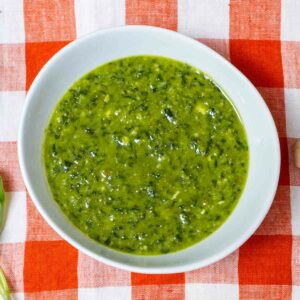
Basil Pistachio Pesto Recipe
Ingredients
- 2 cups fresh basil leaves (packed)
- 3 tablespoons pistachios (roasted and unsalted)
- 2 cloves garlic
- 1/2 cup olive oil (extra virgin)
- coarse sea salt (to taste – a generous pinch)
- 1/2 cup Parmigiano-Reggiano cheese (grated – you can substitute grana padano)
- 3 teaspoons Pecorino Romano cheese (grated – no substitutions)
- 3 tablespoons butter (softened – optional)
Equipment
- Mini Prep Food Processor (Optional)
Instructions
- Shell the pistachios and blanch them in a small pot of boiling water for a minute and a half.
- Place the blanched pistachios in a rolled-up, coarse tea or dish towel and use both hands to roll the towel. The husks should easily separate from the nuts.
- Place the basil, pistachios, garlic and salt in the mortar. Grind with the pestle by first mashing the ingredients on the bottom of the mortar. After the ingredients are mashed, use a circular motion to grind the ingredients together until they form a paste.
- Slowly drizzle in the olive oil and mix with a wooden spoon until incorporated.
- Optionally add butter and mix with the wooden spoon until incorporated.
- Mix in the Parmigiano-Reggiano and Pecorino Romano until incorporated. Taste the pesto and adjust for salt as necessary.
Notes
- You can use a food processor to make this pesto. Grind the basil, garlic, salt and pistachios. Slowly drizzle in the olive oil. Once your paste is formed, move the mixture to a bowl and mix in the parmigiana and pecorino cheeses. Add additional salt as needed.
- If you’re serving the pesto with pasta, use it immediately. (It’s enough for 1 1/2 pounds.) If you’re not using it right away, store in a plastic container, placing plastic wrap in direct contact with the pesto to preserve the pesto’s color.
- You can store the pesto for up to a week.
Nutrition
💡 Frequently Asked Questions
Basil pistachio pesto is a paste-based sauce made in a mortar and pestle or a food processor. Herbs (basil) and nuts (pistachios) combine to make a fragrant and nutty companion for pastas and other main dishes.
The original pesto, made with basil and pine nuts, is believed to have originated in Liguria. The use of pistachio nuts is a variation.
Pistachios, Basil, Garlic, Coarse Salt, Parmigiano-Reggiano Cheese, Pecorino-Romano Cheese, Olive Oil and Butter (optional)
While you can make basil pistachio pesto in a food processor, you’ll get the best results when you pound and grind the ingredient using a mortar and pestle.
No. You can use the pesto in many different ways. It can be a condiment, a crostini spread or even a pizza topping.
You can store some or all of it for up to a week in a plastic container. It’s important to line the top of the pesto with plastic wrap so that the pesto retains its verdant green color.

📍 Pin This Recipe


