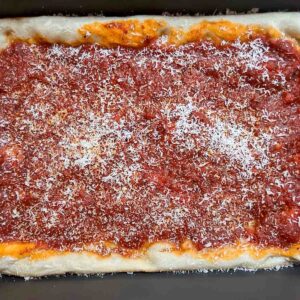
Philly-Style Tomato Pie Recipe
It's easy to make Philly-style tomato pie with some simple grocery store ingredients. It's a great party dish that doesn't break the bank.
Ingredients
Dough
- 340 grams bread flour (at least 10% protein content)
- 4 grams instant yeast
- 221 grams water (90°f/32°c to 100°F/38°C)
- 9 grams salt (fine salt like table salt)
Tomato Sauce
- 3 cups tomato purée (from passata or whole tomatoes)
- 3 tablespoons olive oil
- 3 cloves garlic (fresh, minced, about 1 tablespoon)
- 1/2 teaspoon garlic powder
- 1 teaspoon onion powder
- 1 teaspoon oregano (dry)
- black pepper (to taste)
- salt (to taste)
- 1/8 teaspoon hot chili flakes (optional)
Cooking the Pie
- 3 tablespoons olive oil (for greasing the pan and cooking the pizza)
Serving the Pie
- Pecorino Romano cheese (grated, to taste)
- dry oregano (to taste, optional)
- hot chili flakes (to taste, optional)
- garlic powder (to taste, optional)
Equipment
- 2-Quart Stainless Steel Saucepan
- pizza stone (optional)
Instructions
- Mix the flour, instant yeast and salt in a mixing bowl until the dry ingredients are thoroughly combined
- Pour in the warm water and mix thoroughly. The water will activate the yeast and the dough will begin to bubble. Continue to mix the ingredients with a wooden spoon or dough whisk until you get a shaggy dough. Let the mixture sit in a warm place for at least 20 minutes or up to 4 hours.
- Knead the dough by stretching and turning it with your palm until it's smooth, about 10 minutes. (It should become less sticky the more you knead it.) Do the windowpane test: You should be able to see a faint light through the dough when you stretch a small piece into a square between your two hands.
- Shape the dough into a ball and place it back into the mixing bowl. Let the dough ball rest, covered, in a warm place for 2 hours. It should double in size. About 15 minutes before the dough has risen, preheat an oven on the conventional setting to 400°F/ 200°C. (If you're using a baking stone, place the stone on the middle rack of the oven.)
- Spread 3 tablespoons of olive oil in a high-sided 14x10-inch metal pan (see equipment list). Remove the dough carefully from the mixing bowl, place it into the oiled pan and form it into a rectangle.
- Spread the dough as far to the edges of the pan as it will go. Let the dough relax for another 30 minutes. (Once it's relaxed, the dough should stretch from end to end in the pan.)
- Make the sauce while the dough is relaxing in the pan. Heat a 2-quart pan on medium and pour in 3 tablespoons of olive oil. Once the oil is shimmering, about 30 seconds, add the minced garlic. Let the garlic sauté until it's just fragrant, about a minute. Pour in the puréed tomato and add the oregano, garlic powder, onion powder, optional hot chili flakes and black pepper. Cook the sauce on a low fire until it's reduced by about a third (about 20 to 30 minutes). The sauce should be very thick so that it slowly drips off a spoon. Add a little water if the sauce gets too thick and starts sticking to the bottom of the pot.
- Stretch the dough from edge to edge of the pan. Spread the sauce on top of the stretched dough with a large spoon, leaving 1/2 inch on the edges unsauced.
- Place the pan in the preheated oven on the stone, if using, or place it on the bottom surface of the oven. Bake for about 15 minutes and, using a spatula, lift the pie from the bottom of the pan to check for doneness. (The pie should lift out of the pan easily.) The tomato pie will be done when the bottom is a beautiful golden brown.
- Once it's done, remove the pie from the pan. Place it on a cooling rack so that it retains its crunch.
- Grate Pecorino Romano, along with any of the optional toppings, onto the pie. Cut the pie into eight equal portions and serve either hot or at room temperature.
Notes
- You can let the pie cool and serve it at room temperature up to six hours after baking.
- Skip the grated cheese if you want to create a vegan version.
- Since the sauce is enough for two pies, you can refrigerate the extra sauce for up to a week and use it later.
- You can substitute Parmigiano-Reggiano or Grana Padano for the Pecorino Romano. Note that your tomato pie may not have the same salty flavor punch.
- Get creative with the pie toppings. Potential add-ons include pepperoni, mushrooms, sausage, hot honey and even pineapple.
Nutrition
Calories: 245kcalCarbohydrates: 36gProtein: 6gFat: 9gSaturated Fat: 1gPolyunsaturated Fat: 1gMonounsaturated Fat: 6gSodium: 453mgPotassium: 270mgFiber: 2gSugar: 3gVitamin A: 263IUVitamin C: 5mgCalcium: 20mgIron: 1mg
We hope you love this recipe.Sign up for our newsletter for more of our faves.